Rebar coupler sizes
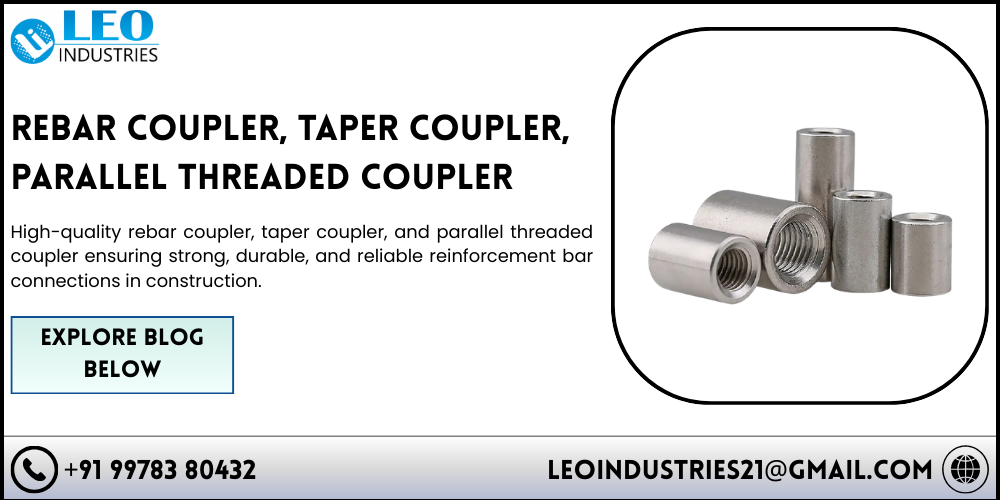
Rebar Coupler Sizes
Rebar coupler sizes refer to the range of couplers manufactured to match different TMT bar diameters used in reinforced concrete structures. Selecting the correct size is critical because the coupler must align with the bar diameter, fit-up length, and splice performance requirements. Rebar couplers are commonly specified by the nominal bar size in millimeters, and the same project may use multiple sizes across foundations, columns, beams, shear walls, and slab reinforcement. A well-matched coupler size helps achieve consistent load transfer, reliable alignment, and quicker site execution compared to conventional lap splicing.
Working Principle & Process Flow
Coupler sizing is based on the rebar diameter and the splice type. In mechanical bolted couplers, the bar ends are inserted into a sleeve and locked using shear bolts that clamp the ribs of the TMT bar. In threaded couplers, the bar ends are prepared with compatible threads and then joined through a sleeve. In both cases, performance depends on correct diameter matching, adequate embedment, and proper installation torque or tightening sequence. A practical size selection process typically starts from the bar schedule, checks the required splice category, and then chooses the corresponding coupler size for each bar diameter used on site.
Applications & Benefits
- Size selection for bar schedules across columns, beams, slabs, and shear walls
- Rebar splicing in congested reinforcement zones where laps become difficult
- Repair and retrofit work where existing bars need extension using the same diameter
- High-rise and infrastructure projects requiring consistent splices across multiple bar sizes
- Fast execution zones where bar overlap lengths increase steel consumption
- Correct sizing improves fit-up, alignment, and splice reliability
- Supports mixed bar diameters across one structure with standardized selection
- Helps reduce steel congestion by replacing long lap lengths with compact splices
- Enables faster site workflow with fewer rework issues from mismatch
Key Features
- Sizes typically available for common TMT bar diameters used in RCC work
- Options for same-size splicing and reducer splicing for different bar sizes
- Coupler body designed to ensure consistent engagement length and bar positioning
- Site-friendly identification to reduce mix-up between multiple sizes
- Compatibility planning based on bar grade, rib pattern, and splice requirement
Common Rebar Coupler Size Range
In most construction projects, rebar coupler sizes are supplied to match widely used TMT bar diameters. Typical size coverage includes 12 mm, 16 mm, 20 mm, 25 mm, 28 mm, 32 mm, and 40 mm for mainstream RCC applications. For projects that require smaller reinforcement, 10 mm couplers may be used, while heavy infrastructure may demand higher diameters depending on design. Reducer couplers are used when two different bar sizes must be joined, such as 20 mm to 16 mm or 25 mm to 20 mm, based on engineering approval and splice detailing.
Maintenance & Safety Tips
Pre-Installation
- Verify bar diameter from the bar schedule before selecting the coupler size
- Check the coupler marking or label to avoid mixing similar sizes on site
- Ensure bar ends are straight, clean, and free from loose rust, mud, or paint
Installation Practices
- Insert bars fully to the stop pin to achieve correct engagement length
- Tighten bolts evenly and complete the sequence until all shear heads break off
- Do a final visual check that each bolt head has sheared for confirmation of torque
FAQs — Rebar Coupler Sizes
Q1 How are rebar coupler sizes specified?
Q2 What are the most common coupler sizes used in RCC construction?
Q3 Can a coupler connect two different bar diameters?
Q4 What happens if the coupler size is incorrect?
Q5 How should coupler sizes be managed on a busy project site?
Get in Touch
Leo Industries • We’re here to help
Relevant Tags
- Rebar coupler sizes
- Rebar coupler size chart
- Coupler sizes for TMT bars
- Mechanical rebar coupler sizes
- MBT coupler sizes
- Shear bolt coupler sizes
- Reducer rebar coupler
- Rebar splicing coupler size
- TMT bar splicing coupler
- Rebar coupler supplier India
- Coupler selection guide
- Coupler installation checklist
Our Blogs
- Rebar Coupler for Dam Construction
- Rebar Coupler for High Rise Buildings in Ahmedabad | Leo Industries
- TMT Coupler for Road Construction
- Rebar Coupler for Industrial Foundation
- Rebar Coupler for Precast Construction
- Rebar Coupler for Tunnel Construction
- Rebar Coupler for Metro Rail Project
- Rebar Coupler for Flyover Construction
- Rebar Coupler for Bridge Construction
- Mechanical Splicing Coupler Supplier
- Mechanical Rebar Coupler Manufacturer
- Rebar Coupler for Construction
- Buy TMT Bar Coupler in India
- Buy Rebar Coupler in India
- MBT Coupler Price in India
- MBT Coupler Supplier in India
- TMT Bar Coupler Price in India
- TMT Bar Coupler Manufacturer in India
- Rebar Coupler Supplier in India
- Mechanical Splicing vs Traditional Methods
- Reinforcement Connection Methods Explained
- Benefits of Advanced Reinforcement Technology
- Complete Guide to Reinforcement Connections
- What Is Mechanical Splicing in Construction
- Civil Construction Products Ahmedabad
- Structural Components Manufacturer Ahmedabad
- Construction Engineering Products Ahmedabad
- Reinforcement Solutions Manufacturer in Ahmedabad
- ISI Mark Rebar Coupler manufacturing company
- ISI Mark Rebar Coupler manufacturer in India
- ISI Mark Rebar Coupler manufacturer in India
- ISI Mark Rebar Coupler manufacturer in Gujarat
- ISI Mark Rebar Coupler manufacturer in Gujarat
- ISI Mark Rebar Coupler manufacturer in Ahmedabad
- ISI Mark Rebar Coupler manufacturer in Ahmedabad
- Parallel Threaded Rebar Coupler manufacturing company
- Parallel Threaded Rebar Coupler manufacturer in India
- Parallel Threaded Rebar Coupler manufacturer in Gujarat
- Parallel Threaded Rebar Coupler manufacturer in Ahmedabad
- Tapered Thread Rebar Coupler manufacturing company
- Tapered Thread Rebar Coupler manufacturer in India
- Tapered Thread Rebar Coupler manufacturer in Gujarat
- Tapered Thread Rebar Coupler manufacturer in Ahmedabad
- Rebar Reducer Coupler manufacturing company
- Rebar Reducer Coupler manufacturer in India
- Rebar Reducer Coupler manufacturer in Gujarat
- Rebar Reducer Coupler manufacturer in Gujarat
- Rebar Reducer Coupler manufacturer in Ahmedabad
- MBT Rebar Coupler manufacturing company
- MBT Rebar Coupler manufacturer in India
- MBT Rebar Coupler manufacturer in Gujarat
- MBT Rebar Coupler manufacturer in Ahmedabad
- Rebar Coupler factory in Ahmedabad
- Rebar Coupler production company
- Rebar Coupler manufacturer in Gujarat
- BIS Certified Rebar Coupler manufacturer
- ISI Mark Rebar Coupler manufacturer
- Parallel Threaded Rebar Coupler Manufacturer in Ahmedabad
- Tapered Thread Rebar Coupler manufacturer
- Rebar Reducer Coupler manufacturer
- MBT Rebar Coupler manufacturer
- Rebar Coupler manufacturer
- ISI Mark Rebar Couplers in Gujarat
- BIS Certified Rebar Coupler Supply in India
- IS 16172 Standard Rebar Coupler Supplier in Gujarat
- Class H Rebar Coupler Manufacturer in India
- ISI Mark Rebar Couplers in Ahmedabad
- IS 16172 Standard Rebar Coupler Supplier in India
- BIS Certified Rebar Coupler Supplier in Ahmedabad
- Class H Rebar Coupler Manufacturer in Gujarat
- ISI Mark Rebar Couplers Manufacturer in Ahmedabad
- BIS Certified Rebar Coupler Supplier in India
- IS 16172 Standard Rebar Coupler in Gujarat
- Class H Rebar Coupler Manufacturer in Ahmedabad
- IS 16172 Standard Rebar Coupler in Ahmedabad
- ISI Mark Rebar Couplers Supplier in Gujarat
- IS 16172 Standard Rebar Coupler Manufacturer in India
- Class H Rebar Coupler in Gujarat
- BIS Certified Rebar Coupler Manufacturer in Ahmedabad
- BIS Certified Rebar Coupler Manufacturer in India
- Class H Rebar Coupler Supplier in India
- ISI Mark Rebar Couplers Manufacturer in Gujarat
- IS 16172 Standard Rebar Coupler Supply in India
- BIS Certified Rebar Coupler in Gujarat
- ISI Mark Rebar Couplers Supplier in Ahmedabad
- Rebar Coupler for RCC Construction
- Stainless Steel Rebar Coupler
- Rebar Coupler Supplier in Gujarat
- Rebar Coupler Manufacturer in Ahmedabad
- Construction Rebar Coupler Solutions
- Rebar Coupler for Bridges and Highways
- Rebar couplers for RCC structures
- Tapered Thread Rebar Coupler
- Rebar Coupler Supplier in Ahmedabad
- Rebar coupler manufacturer in India
- Stainless Steel Rebar Coupler Manufacturer
- Parallel Thread Rebar Coupler Supplier
- Tapered Thread Rebar Coupler Manufacturer
- TMT Bar Coupler Supplier in India
- Rebar Coupler Manufacturer in Ahmedabad
- Threaded Rebar Coupler Manufacturer
- Stainless Steel Rebar Coupler Manufacturer
- TMT Bar Coupler Manufacturer in Gujarat
- Rebar Coupler Manufacturer in Ahmedabad
- Mechanical Rebar Coupler Supplier India
- Reducer Pipe Fitting PVC
- Reducer Coupling Threaded
- Reducer Coupling Pipe Fittings
- Reducer Coupler Fittings
- Reducer Coupler Manufacturer
- Reducer Coupler Steel
- Reducer coupler pvc
- Tamper proof nut bolt
- Anti vandal bolts
- Security bolt Fixings
- Countersunk Shear Bolt
- Coupler Threading Machine
- Best parallel threaded tmt rebar coupler tmt bar coupler
- Parallel threaded tmt rebar coupler tmt bar coupler
- Best mbt rebar coupler
- Surya mbt rebar coupler
- Mbt rebar coupler manufacturers
- Mbt rebar coupler price list Guide
- Rebar Coupler manufacturers in India
- Best rebar coupler taper coupler parallel threaded coupler
- Rebar coupler taper coupler parallel threaded coupler price
- Rebar coupler taper coupler parallel threaded coupler pdf
- Rebar Couplers Manufacturer & Supplier from Rajkot India
- Rebar coupler sizes
- Rebar coupler pdf
- Rebar coupler types
- Rebar Coupler Price in India
- Rebar Coupler manufacturers
- Rebar Splices & Couplers
- Parallel Threaded Coupler Manufacturer in Jodhpur
- Rebar Reducer Coupler in Kalyan
- TMT Bar Coupler Manufacturers in Navi Mumbai
- Tapered Coupler Manufacturers in Khammam
- Parallel Threaded Coupler Manufacturer in Miryalaguda
- Rebar Reducer Coupler Manufacturers in Bhusawal
- Tapered Coupler Manufacturers in Jalna
- Rebar Reducer Coupler Manufacturers in Telangana
- TMT Bar Coupler Manufacturers in Nandyal
- MBT Coupler Manufacturers in Tenali
- TMT Bar Coupler Manufacturers in Bengaluru
- Parallel Threaded Coupler Manufacturer in Raichur
- MBT Coupler Manufacturers in Tiruvottiyur
- Rebar Reducer Coupler Supply in Kerala
- Tapered Coupler Manufacturers in West Bengal
- Stainless Stee
- Metal Coupler Manufacturer in Bikaner
- TMT Bar Coupler Manufacturers in Karnataka
- MBT Coupler Suppliers in Tiruvottiyur
- MBT Coupler Suppliers in Tamil Nadu
- Parallel Threaded Coupler Manufacturer in Karnataka
- Tapered Coupler Manufacturers in Karnataka
- MBT Coupler Manufacturers in Visakhapatnam
- Rebar Coupler Manufacturers in Raichur
- Stainless Steel Coupler Manufacturers
- Tapered Coupler Manufacturers in Vellore
- Mild Steel Coupler Manufacturer
- TMT Bar Coupler Manufacturer in Kerala
- Rebar Reducer Coupler Supplier
- TMT Bar Coupler Supplier in Suryapet
- Tapered Coupler Sangli
- MBT Coupler Warangal
- Rebar Reducer Coupler Manufacturer in Palakkad
- MBT Coupler Supplier in Tamil Nadu
- Parallel Threaded Coupler Manufacturer in Thrissur
- MBT Coupler Manufacturers in Madurai
- Rebar Reducer Coupler Manufacturer in Kerala
- Tapered Couplers in Sangli
- Rebar Reducer Coupler Manufacturer in Salem
- TMT Bar Coupler Manufacturer in Tumkur
- Stainless Steel Coupler Manufacturer in Raiganj
- Parallel Threaded Coupler Manufacturer in Thane
- Rebar Reducer Coupler in Kerala
- TMT Bar Coupler Manufacturer in Raiganj
- Rebar Reducer Coupler Manufacturer in Maharashtra
- Rebar Coupler Manufacturers in Jalandhar
- Supplier Submersible Pump Impeller Sleeve Gujarat Ahmedabad
- Stainless Steel Impeller Sleeve Submersible Gujarat
- Impeller Sleeve Submersible Pump Ahmedabad
- Impeller Sleeve Stainless Steel Submersible Supplier
- Impeller Sleeve for Submersible Pump Supplier
- Submersible Pump Impeller Sleeve Manufacturer
- mbt coupler manufacturers in kadapa
- rebar reducer coupler in parbhani
- rebar reducer coupler in thrissur
- tmt bar coupler manufacturers in bhilwara
- rebar reducer couplers in dungarpur
- mild steel coupler manufacturer in kerala
- rebar coupler manufacturers in maharastra
- tapered couplers in kerala
- Finding Top MBT Coupler Manufacturers in Tiruvottriyur
- Top Rebar Reducer Coupler Manufacturers Serving Sikar
- Premium Rebar Reducer Coupler Supply in Mumbai
- rebar coupler manufacturers in tamil nadu
- mbt rebar coupler manufacturer in andhra pradesh
- mild steel coupler manufacturer in delhi
- rebar coupler manufacturers in kolhapur
- MBT Rebar Coupler Manufacturer in Kerala
- MBTC Coupler Suppliers in Karnataka
- MBTC Coupler Manufacturers in Suryapet
- Leading Rebar Reducer Coupler Manufacturers in Jodhpur
- parallel threaded coupler manufacturers in khammam
- mild steel coupler manufacturers karnataka
- tmt bar coupler manufacturer in miryalaguda
- mbt coupler manufacturers in palakkad
- mbt coupler dealers in karnataka
- mbt coupler dealers in maharashtra
- rebar reducer couplers in kerala
- Tapered Coupler Manufacturer in Kerala
- Rebar Roller Threading Machine
- Rebar Pilling Blade for Roll Threading Machine
- Rebar Rib Peeling Blade for Thread Rolling Machine
- CDRG Roller for Roll Thread Machine | High-Performance Tooling
- CDRG Rebar Roll Thread Roller – Automation Grade
- CDRG Threading Machine Supplier in Ahmedabad
- CDRG Threading Machine Supplier in Gujarat
- CDRG Threading Machine Manufacturer in Gujarat
- CDRG Threading Machine Manufacturer
- CDRG Threading Machine (Roll Threading Machine)
- CDRG Roller for Roll Thread Machine
- 20mm mbt rebar coupler manufacturer in sabarkantha
- MBT Coupler Manufacturers in Jharkhand
- parallel threaded coupler manufacturers in kalyan
- tapered coupler manufacturer in tamil nadu
- Tapered Coupler Manufacturer in Tamilnadu
- Tapered Coupler Manufacturer in Uttarakhand
- Rebar Reducer Coupler in Tamil Nadu
- Parallel Threaded Coupler Manufacturers in Maharashtra
- Mild Steel Coupler Manufacturer in Khammam
- TMT Bar Coupler Manufacturer in Satara
- Rebar Reducer Coupler Manufacturers in Mumbai
- Mild Steel Coupler Manufacturer in Sangli
- Tapered Coupler Manufacturer in Bhusawal
- Stainless Steel Coupler Manufacturer in Sikar
- TMT Bar Coupler Manufacturers in Maharashtra
- Mild Steel Coupler Manufacturer in Tiruchirappalli
- Parallel Threaded Coupler Manufacturer in Gulbarga
- Rebar Coupler Manufacturer Serving Assam & Vellore
- Rebar Coupler Manufacturer in Assam
- MBT Couplers
- 32x25mm Reducer Coupler
- 25x20mm Reducer Coupler
- 20x16mm Reducer Coupler
- Reducer Coupler
- Lock Shear Bolt
- 16mm, 20mm, 25mm Rebar Coupler
- Metal Couplers
- 32 mm EN8D Steel TMT Rebar Coupler
- 25 mm EN8D Steel TMT Rebar Coupler
- 20x16 mm EN8D Steel TMT Rebar Coupler
- Rebar Coupler Taper Coupler Parallel Threaded
- Rebar Coupler – Taper Coupler & Parallel Threaded Coupler
- 16 x 12 mm Reducer MBT Coupler
- 16 x 12 mm Reducer MBT Coupler
- 25 x 20 mm MBT Rebar Coupler
- 20mm MBT Rebar Coupler
- 12mm MBT Rebar Coupler
- 16mm MBT Rebar Coupler
- 25mm MBT Rebar Coupler
- MBT Rebar Coupler
- 16 mm EN8D Steel TMT Rebar Coupler
- 20mm EN8D Steel TMT Rebar Coupler
- 16mm EN8D Steel TMT Rebar Coupler
- Mild Steel Rebar TMT Coupler
- Rebar Coupler | Taper Coupler | Parallel Threaded Coupler
- Rebar Reducer Coupler
- Rebar Reducer Coupler
- 12MM TMT Bar Coupler
- 16MM TMT Bar Coupler
- Rebar Coupler Manufacturers in Gujarat
- Rebar Coupler manufacturers in India
- Tmt Rebar Coupler Manufacturers Near Me
- Tmt Rebar Coupler Manufacturers in India
- TMT Rebar Coupler Manufacturers in India
- 12mm TMT Bar Coupler
- Rebar Coupler Manufacturers in Rajkot
- 16mm TMT Bar Coupler
- Best TMT Rebar Coupler Manufacturers in India
- Rebar Coupler Manufacturers in Gujarat
- Top 10 TMT Rebar Coupler Manufacturers in India
- Impeller Collet Sleeve Manufacturers in India
- Top 10 TMT Rebar Coupler Manufacturers in India
- Impeller Collet Sleeve for Solar Pump
- Impeller Collet Sleeve for Solar Pump
- Impeller Collet Sleeve for Solar Pump
- Impeller Collet Sleeve Manufacturers in India
- Impeller Collet Sleeve for Submersible Pump in India
- Impeller Collet Sleeve for Submersible Pumps
- impeller collet sleeve manufacturer
- Impeller collet sleeve for submersible pump
- Impeller Collet Sleeve Price
- Impeller Collet Sleeve
- TMT Rebar Coupler Manufacturers in India
- Top TMT Rebar Coupler Manufacturers in India
- Rebar Coupler Supplier
- Rebar Coupler Manufacturers in India
- Rebar Coupler Manufacturers in Rajkot
- Rebar Coupler Manufacturers in India
- Top Rebar Coupler Manufacturers in India
- Top 10 Rebar Coupler Manufacturers in India
- Rebar Coupler Manufacturers in Gujarat
- Rebar Coupler Manufacturers in India
- Rebar Coupler Price
- Types of rebar Couplers
- Rebar Coupler Manufacturers in Hyderabad
- Steel rebar coupler manufacturers in india
- Rebar coupler manufacturers near me
- Rebar Coupler manufacturers in Rajkot
- Rebar Coupler manufacturers in gujarat
- Rebar coupler manufacturers in india
- rebar coupler manufacturers