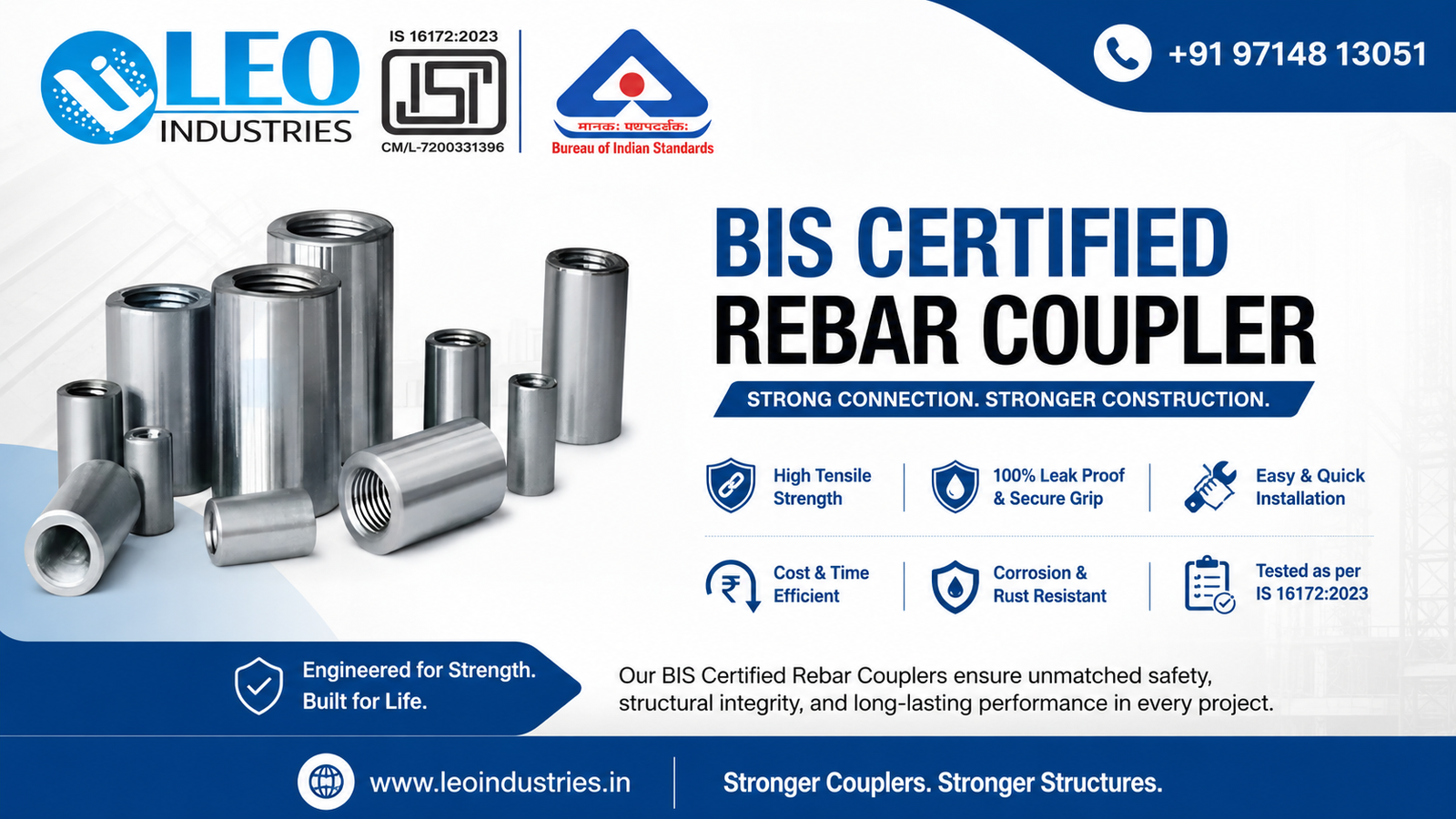
In the demanding realm of structural engineering, achieving absolute continuity in steel reinforcement bars is vital to preserving load-bearing integrity and avoiding catastrophic failures under stress. Historically, lap splicing was the standard industry practice for joining rebars. However, as modern architectural designs push toward taller skyscrapers, wider bridge spans, and complex seismic zones, conventional lap splicing has shown significant safety and physical design limitations.
Integrating a specialized high-strength rebar coupler provides an engineered mechanical alternative, creating a direct, continuous end-to-end connection between reinforcing bars. By removing the need for overlapping steel sections, these couplers eliminate material congestion in densely reinforced columns and joints. This allows architects and structural designers to optimize steel distribution, prevent honeycomb formation during concrete pouring, and secure predictable load transmission paths under extreme dynamic tension.
"According to the rigorous specifications of modern building codes, including the Indian Standard IS 16172:2023, all mechanical couplers must undergo comprehensive physical testing to guarantee a load capacity that exceeds 125% of the rebar's characteristic yield strength."
2. Understanding the High-Strength Rebar Coupler
Mechanical rebar couplers are engineered structural connectors designed to splice two steel reinforcing bars together on site without relying on the surrounding concrete matrix to transfer the load. Standard lap splices depend on bond stresses between the concrete and the steel, making them highly vulnerable during seismic load reversals, micro-cracking, or concrete spalling. By contrast, a high-strength rebar coupler establishes a solid, direct physical bridge between the bars.
This independent structural path ensures that the structural element retains its full design tensile strength even during catastrophic events, such as earthquakes or blast impacts, which might degrade the surrounding concrete cover. Furthermore, the use of mechanical couplers streamlines site labor, improves concrete consolidation around heavy joint zones, and maintains the exact structural alignment of reinforcing cages across multiple floors.
Standard Parallel Thread CouplerHighly reliable mechanical joint featuring uniform thread diameters for rapid structural installations and predictable torque checks.
Tapered Thread Rebar CouplerDesigned with a progressive, conical thread geometry that facilitates self-aligning connections and eliminates cross-threading under tight field clearances.
MBT Bolt CouplerNo pre-threading or cold forging required. Uses integrated structural shear bolts that snap off at a calibrated torque level to secure the splice.
Rebar Reducer CouplerEngineered to safely connect structural bars of different diameters, maintaining stress flow transitions between lower and upper columns.
3. Threading and Forging Technology
Developing high-strength mechanical joints requires rigorous metallurgical controls and precise machining processes. Standard threads cut directly into standard TMT steel can reduce the effective bar diameter, creating a structural weak point prone to failure under cyclic loads. To eliminate this issue, Leo Industries utilizes an advanced cold-upset forging technique.
During this process, the end of the rebar is placed into a high-pressure hydraulic forging machine. The machine cold-compresses the bar, expanding its cross-sectional area at the joint end. Precision threading machinery then processes this enlarged end. Because of this pre-forging step, the minor thread diameter matches or exceeds the nominal diameter of the unthreaded rebar, ensuring that the joint remains stronger than the bar itself.
At our manufacturing plant in Ahmedabad, we deploy computer-controlled CNC lathes and specialized roll-threading machinery. Unlike traditional cut threads, which sever the steel's internal structural fibers, roll-threading plastically deforms the metal grains, creating continuous flow lines. This cold-working process increases thread hardness, improves surface finish, and provides superior resistance to structural fatigue.
4. Features of High-Strength Mechanical Joints
High-strength mechanical couplers provide several clear operational and structural advantages over legacy lapping techniques. These benefits help engineers design safer, more cost-effective concrete structures:
Continuous Load Path AlignmentAligns concentric forces perfectly to eliminate eccentric stresses typical of offset lap joints.
High Seismic PerformanceExhibits excellent performance under high cyclic strain, meeting global seismic design standards.
Material and Cost SavingsEliminates extra lap lengths (which can exceed 40 to 50 times the bar diameter), reducing total steel consumption and structural weight.
5. Key Construction Applications
The structural reliability and space-saving design of mechanical couplers make them essential for high-performance concrete structures. Typical applications include:
High-Rise Columns & Shear WallsAllows for high reinforcement ratios in skyscrapers without restricting concrete flow or creating voids.
Bridge Piles, Piers & GirdersMaintains structural continuity in large-diameter foundation piles and piers subjected to significant lateral forces.
Metro Rail Viaducts & TunnelingWithstands cyclic vibrations and dynamic stresses from passing transit trains, ensuring long-term tunnel safety.
Heavy Industrial Machinery FoundationsProvides high pull-out resistance and dampening strength to handle continuous mechanical vibrations.
6. Material Engineering and Specifications
Selecting the correct material grade is critical to ensuring mechanical couplers match the performance of the reinforcing steel and the service environment of the structure. Depending on environmental exposure, design loads, and corrosion risks, we manufacture couplers in several premium material grades:
Stainless Steel (SS316, SS316L, SS304)SS316L contains molybdenum to prevent chloride corrosion, making it ideal for marine projects and chemical plants.
Carbon & Alloy Steel (EN8, EN31)EN8 is a medium carbon steel offering high tensile strength and wear resistance, suited for standard commercial structures.
Super Duplex SteelCombines austenitic and ferritic structures to deliver high tensile strength and outstanding resistance to stress corrosion cracking.
Mild Steel & Structural AlloysCost-effective, versatile grades that undergo controlled heat treatments to meet core ductility and load requirements.
7. Why Partner with Leo Industries?
Established in 2015, Leo Industries has grown into a trusted manufacturer, supplier, and exporter of high-strength rebar couplers and structural components based in Ahmedabad, Gujarat. Under the leadership of Mr. Mahesh Patel and Mr. Yagnesh Patel, we have expanded our infrastructural capabilities and earned a reputation for reliability in the civil construction market.
Our engineering processes focus on absolute compliance with regulatory standards. Our products are fully certified under **IS 16172:2023** and **BIS (CM/L-7200331396)**. These certifications verify that our couplers meet strict standards for slip test limits, yield strength ratios, and high cyclic tension.
Operating from a modern 1,000 square foot facility in Gujarat, we utilize automated CNC machining, high-capacity cold-forging presses, and dynamic testing equipment. This combination of advanced equipment and careful quality control ensures that every batch of couplers we deliver is uniform, reliable, and ready for high-performance structural projects.
8. Frequently Asked Questions
Lap splicing overlaps two rebars to transfer stress through concrete shear bonds, which can cause congestion and requires more steel. Rebar couplers connect bars end-to-end mechanically. This establishes an independent load path, reduces steel congestion, and allows for clean concrete placement with minimal honeycomb risk.
Yes, all of our mechanical couplers are manufactured to meet the strict standards of IS 16172:2023. They carry official Bureau of Indian Standards (BIS) registration under license number CM/L-7200331396, verifying compliance with nationwide engineering regulations.
We manufacture couplers using a range of materials, including SS316, SS316L, and SS304 stainless steel, structural carbon steels like EN8 and EN31, Super Duplex alloys, and mild steel grades depending on project specifications and environmental exposure.
Tapered thread couplers feature a distinct conically tapered thread geometry. This profile naturally guides the rebar into the center of the coupler on site, helping prevent cross-threading and simplifying alignment in tight reinforcement setups.
Get in Touch with Our Engineering Experts
Need custom designs, large-scale supply rates, or testing documentation? Contact Leo Industries for technical support and project consultations.