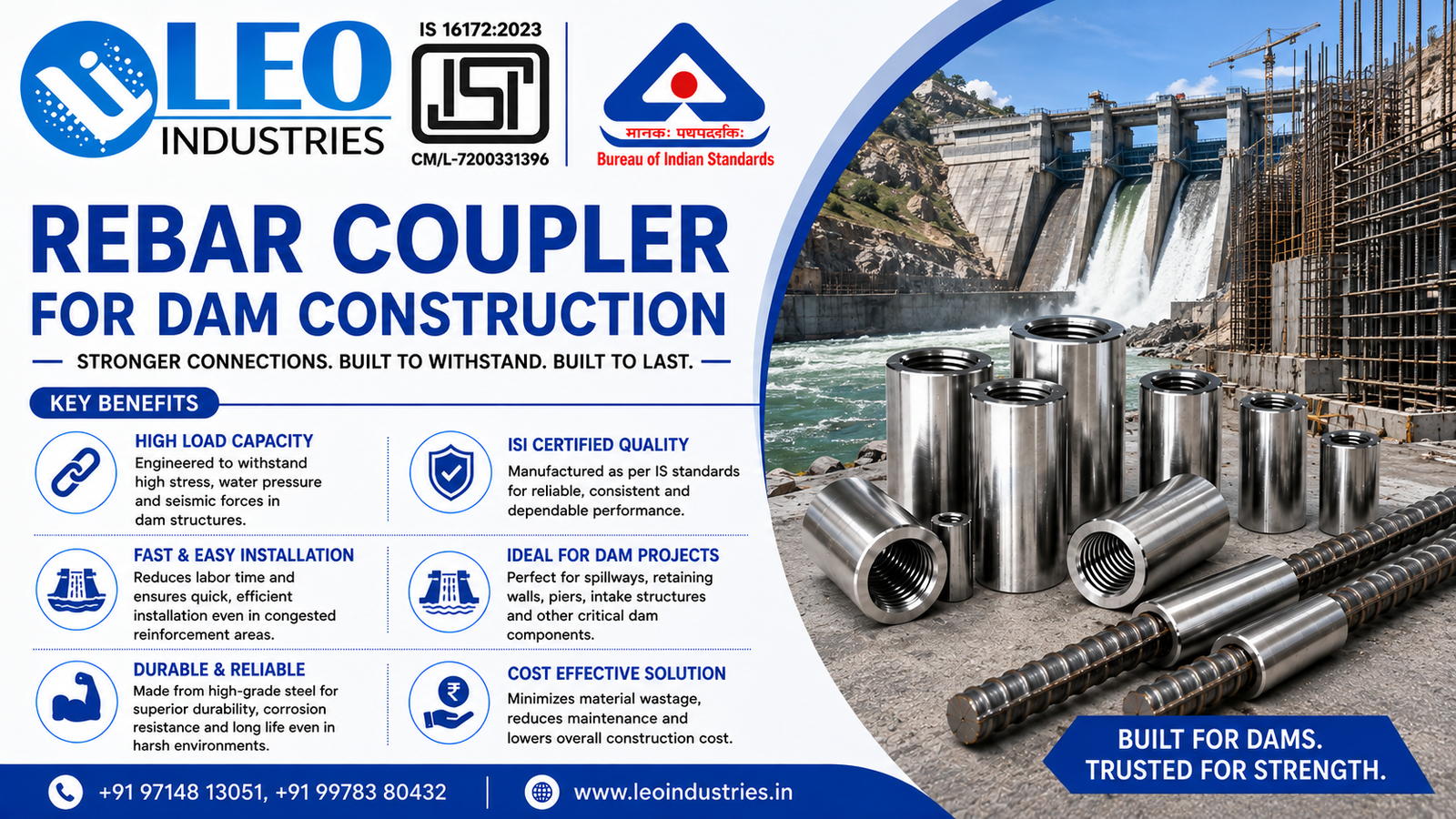
Rebar Coupler for Dam Construction
Expert rebar coupler solutions for dam construction projects in Ahmedabad. Discover reliable, high-strength couplers designed for critical infrastructure.
What is a Rebar Coupler? An Overview
A rebar coupler is a mechanical device used to join two reinforcing steel bars (rebars) end-to-end. Instead of relying on overlapping sections of rebar, which can lead to congestion and stress concentrations, couplers provide a direct, strong connection. They essentially act as a splice, transferring the tensile and compressive forces from one bar to the next.
These couplers are typically made from high-strength steel and are designed to match the diameter and grade of the rebars they connect. The connection is achieved through various mechanical means, such as threading, swaging, or bolting, ensuring a bond that is often stronger than the rebar itself. This method is particularly vital in large concrete structures where continuous reinforcement is essential for structural integrity.
Key Features and Technical Specifications
When specifying rebar couplers for demanding applications like dam construction, certain technical attributes are critical. These features ensure the coupler can perform reliably under the immense pressures and environmental conditions typical of such projects.
- High Tensile Strength: Capable of exceeding the yield strength of the rebar it connects.
- Fatigue Resistance: Designed to withstand repeated stress cycles without failure.
- Corrosion Resistance: Materials and coatings that prevent degradation in exposed or submerged environments.
- Full Mechanical Strength: Achieves 100% of the rebar's tensile strength and ductility.
- Variety of Thread Types: Available in parallel, taper, or other specialized threads for secure engagement.
- Material Compatibility: Manufactured from steel grades that match or exceed the rebar being joined.
- Ease of Installation: Designed for efficient field installation with standard tools.
- Diameter Range: Available to suit various rebar sizes commonly used in large-scale construction.
Industrial Applications and Use Cases
The robust nature of rebar couplers makes them suitable for a wide array of demanding construction scenarios, especially those requiring high structural integrity and longevity.
- High-Rise Buildings: Connecting rebar in columns and beams to maintain continuous strength.
- Bridges and Flyovers: Ensuring strong reinforcement in decks, piers, and abutments.
- Tunnels and Underground Structures: Providing reliable splices in confined and high-pressure environments.
- Industrial Foundations: Supporting heavy machinery and structures with robust reinforcement.
- Seismic Zones: Offering enhanced ductility and strength to resist earthquake forces.
- Precast Concrete Elements: Facilitating the joining of precast sections for faster construction.
- Marine Structures: Withstanding corrosive environments and constant hydrostatic pressure.
- Dams and Water Retaining Structures: Ensuring the integrity of massive concrete walls against extreme water pressure and seismic activity.
How to Choose the Right Rebar Coupler
Selecting the appropriate rebar coupler is a critical decision that directly impacts the structural integrity and lifespan of a project. For critical applications like dam construction, a meticulous approach is necessary.
- Project Requirements: Assess the specific loads, environmental conditions, and seismic requirements of the dam.
- Rebar Specifications: Match the coupler's diameter, grade, and thread type to the rebars being used.
- Material Quality: Verify the coupler is manufactured from high-strength steel with appropriate corrosion resistance.
- Certifications and Standards: Ensure the coupler meets relevant national and international construction standards (e.g., ISO, BIS).
- Supplier Reputation: Choose a manufacturer with a proven track record in supplying critical infrastructure projects.
- Installation Method: Consider the ease and speed of installation, and the availability of trained personnel.
- Testing and Verification: Confirm that the coupler has undergone rigorous testing for tensile strength, fatigue, and other performance metrics.
- Technical Support: Ensure the supplier can provide necessary technical assistance and documentation.
Quality Standards and Compliance
For any construction project, especially one as significant as a dam, adherence to stringent quality standards and compliance with regulatory requirements is non-negotiable. Reputable rebar coupler manufacturers will ensure their products meet or exceed industry benchmarks. This often includes compliance with standards set by organizations like the Bureau of Indian Standards (BIS), ISO (International Organization for Standardization), and specific international codes relevant to structural reinforcement.
Buyers should always verify that the couplers they procure are accompanied by necessary certifications and test reports. These documents provide assurance of the material's strength, durability, and performance characteristics. A supplier's commitment to quality control throughout the manufacturing process, from raw material sourcing to final product inspection, is a strong indicator of reliability for critical infrastructure applications.
Why Leo Industries' Experience and Capability Matters
Established in 2015 in Ahmedabad, Gujarat, Leo Industries has developed significant expertise in manufacturing high-quality rebar couplers. Our foundation is built on a deep understanding of engineering principles and the demanding requirements of the construction industry. We leverage advanced manufacturing processes and a skilled team to produce couplers that meet rigorous performance standards.
Our manufacturing capabilities include a range of modern machinery, such as CNC machines and specialized rebar threading and rolling machines. This allows us to produce a diverse array of couplers, including parallel threaded, tapered threaded, and reducer types, from various steel grades. We also maintain strict quality control at every stage, ensuring that each coupler delivered meets the exact specifications required for critical projects. Our commitment is to provide reliable, high-strength solutions that contribute to the structural integrity and longevity of your construction endeavors.
Installation, Maintenance, and Care Tips
Proper installation and occasional maintenance are key to ensuring the long-term performance of rebar couplers, especially in demanding environments like dam construction.
- Cleanliness: Ensure both the rebar threads and the coupler threads are clean and free from dirt, debris, or rust before assembly.
- Correct Torque: For threaded couplers, apply the specified torque to achieve a secure and strong connection without over-tightening, which can damage the threads.
- Alignment: Ensure the rebars are properly aligned before threading to prevent cross-threading or damage to the coupler.
- Inspection: Periodically inspect the couplers and surrounding concrete for any signs of corrosion, cracking, or distress, particularly in areas exposed to water or harsh chemicals.
- Protection: In aggressive environments, consider protective coatings or wraps for the couplers and exposed rebar ends to enhance corrosion resistance.
- Training: Ensure installation personnel are adequately trained on the specific type of coupler being used and the manufacturer's recommended installation procedures.
Frequently Asked Questions
A1: Rebar couplers offer a direct mechanical connection that provides consistent, high tensile strength, often exceeding that of lap splices. This eliminates the need for overlapping rebar, reducing congestion in dense reinforcement areas and preventing potential stress concentrations that could compromise the dam's integrity under extreme loads.
A2: Yes, rebar couplers are designed to be compatible with a wide range of rebar grades, including high-strength deformed bars commonly used in major infrastructure projects. It is crucial to match the coupler's specifications, such as diameter and thread type, to the specific rebar grade being used.
A3: In seismic zones, dams must withstand significant ground motion. Rebar couplers provide a strong, ductile connection that can absorb and dissipate energy during an earthquake, preventing catastrophic failure of the reinforcement system. Their consistent strength ensures the entire reinforcement cage acts as a cohesive unit.
A4: Rebar couplers for dam construction are typically made from high-strength carbon steel or stainless steel alloys. The choice of material depends on the specific environmental conditions, such as exposure to water, chemicals, or corrosive elements, with stainless steel offering superior corrosion resistance.
A5: Reputable manufacturers ensure quality through rigorous testing, including tensile strength tests, fatigue tests, and material analysis. Compliance with national and international standards (e.g., ISO, BIS) and the provision of detailed test certificates for each batch are essential indicators of quality assurance.
A6: Yes, specialized rebar couplers, particularly those made from stainless steel or with advanced corrosion-resistant coatings, are highly suitable for submerged sections. They provide a reliable splice that is protected from the elements and maintains its structural integrity over the dam's lifespan.
Conclusion
For critical infrastructure projects like dam construction in Ahmedabad and beyond, the choice of rebar splicing technology is a decision that impacts safety, durability, and long-term performance. Mechanical rebar couplers offer a superior alternative to traditional lap splicing, providing consistent high strength, enhanced ductility, and reliable performance under extreme conditions.
When selecting a supplier, it is vital to prioritize experience, adherence to quality standards, and proven capability in manufacturing robust solutions. Leo Industries, with its commitment to engineering excellence and a comprehensive range of high-quality rebar couplers, is equipped to support the demanding requirements of major civil engineering projects. Ensuring the integrity of every connection is fundamental to building structures that stand the test of time.
Get In Touch
Leo Industries