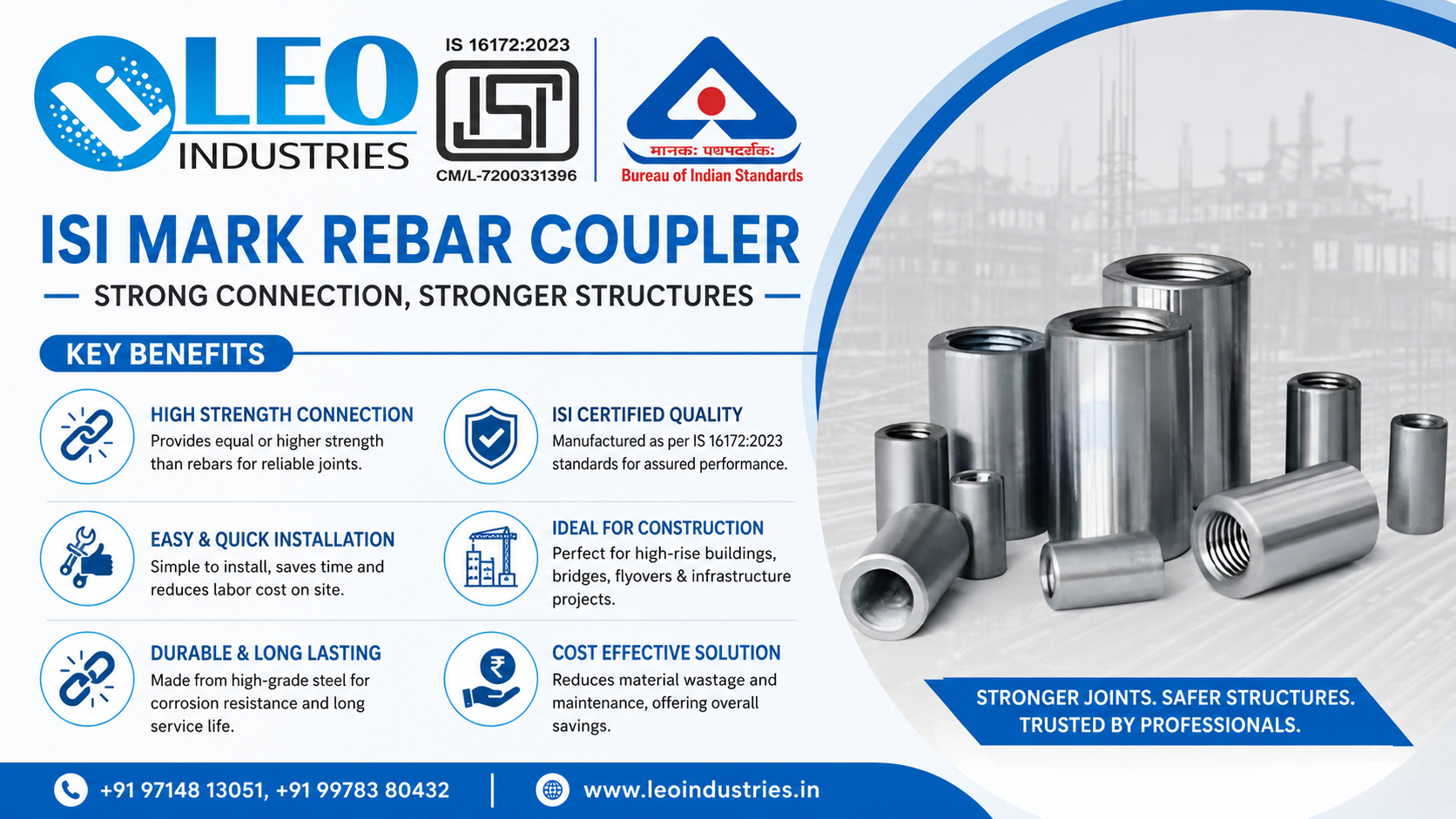
Rebar Coupler Supplier in India
Understand rebar couplers, their applications, and how to choose a reliable supplier in India. Learn about quality standards and installation for structural int
Why This Matters in India
India's infrastructure sector is experiencing significant growth, driven by ambitious projects in urban development, transportation networks, and industrial corridors. From high-rise residential complexes in Mumbai to extensive metro lines in Delhi and new industrial facilities in Gujarat, the demand for efficient and durable construction methods is constant. Rebar couplers offer a proven way to enhance structural performance, reduce material waste, and accelerate project timelines, making their reliable supply crucial across the nation.
What is a Rebar Coupler — Overview
A rebar coupler is a mechanical splicing system designed to connect two reinforcing bars (rebars) end-to-end, creating a continuous load path within a concrete structure. Unlike traditional lapping methods, which rely on overlapping bars, couplers provide a full-strength connection that often exceeds the strength of the rebar itself. They typically consist of a steel sleeve with internal threads that engage with corresponding threads cut onto the ends of the rebars, ensuring a secure and precise joint.
Key Features and Technical Specifications
Choosing the correct rebar coupler involves understanding its core features and technical capabilities. These components are engineered for specific performance requirements in diverse construction environments.
- High Tensile Strength: Designed to withstand significant tensile and compressive forces, often exceeding the rebar's yield strength.
- Material Versatility: Available in various grades, including mild steel (M.S., EN8, EN31), and stainless steel (SS304, SS316, SS410, SS420, SUPER DUPLEX) for specific environmental conditions.
- Thread Type Options: Includes tapered thread, parallel thread, and roll-threaded designs to suit different rebar preparation methods.
- Corrosion Resistance: Stainless steel options provide enhanced durability in corrosive environments, such as coastal regions or industrial zones.
- Compact Design: Minimizes congestion in concrete, allowing for easier concrete placement and improved structural integrity.
- Fatigue Resistance: Engineered to perform reliably under cyclic loading, crucial for structures subjected to dynamic forces.
- Size Compatibility: Manufactured to precisely match various rebar diameters, ensuring a snug and secure fit.
Industrial Applications and Use Cases
Rebar couplers are integral to a wide array of construction projects, offering structural advantages where traditional rebar lapping is impractical or insufficient. Their versatility makes them suitable for critical connections across various sectors.
- High-Rise Buildings: Facilitates column and beam connections, reducing rebar congestion and simplifying formwork.
- Bridge Construction: Ensures continuity of reinforcement in long spans and critical load-bearing elements.
- Metro and Tunnel Projects: Provides robust connections in confined spaces and areas requiring high seismic resistance.
- Dams and Hydroelectric Power Plants: Used in massive concrete structures where structural integrity and durability are paramount.
- Precast Concrete Elements: Allows for efficient and reliable connections between factory-produced concrete components on-site.
- Industrial Structures: Supports heavy machinery foundations and robust frameworks in factories and power plants.
- Seismic Zones: Offers superior performance in earthquake-prone areas by providing ductile, full-strength connections.
How to Choose the Right Rebar Coupler
Selecting the appropriate rebar coupler is a critical decision that impacts the safety and longevity of a structure. Buyers should consider several factors beyond initial cost to ensure long-term performance.
- Project Specifications: Match the coupler type and strength to the specific structural design requirements and rebar grade.
- Material Compatibility: Ensure the coupler material is compatible with the rebar and the environmental conditions of the project site.
- Certification and Standards: Verify that the couplers comply with relevant national and international standards (e.g., IS, ISO, ASTM).
- Supplier Experience: Partner with a manufacturer or supplier that has a proven track record in producing and supplying high-quality couplers.
- Technical Support: Assess the supplier's ability to provide technical guidance, installation support, and documentation.
- Customization Capability: For unique project needs, confirm if the supplier can offer custom sizes or material specifications.
- Delivery Reliability: Evaluate the supplier's logistics and capacity to deliver couplers on schedule to avoid project delays.
- After-Sales Service: Consider the availability of support for any post-installation queries or issues.
Quality Standards and Compliance
Adherence to stringent quality standards is non-negotiable for rebar couplers, as they are fundamental to structural safety. Buyers must ensure that products meet or exceed industry benchmarks. In India, compliance with Indian Standards (IS) is often required, alongside international standards like ISO or ASTM, depending on project specifications. Key aspects to verify include material composition, thread accuracy, tensile strength, and fatigue resistance. A reputable supplier will provide comprehensive test certificates and documentation for their products, confirming their compliance with specified standards. This due diligence helps ensure that the couplers will perform as expected under design loads and environmental conditions.
Why Company Experience and Capability Matters
The reliability of a rebar coupler is directly linked to the manufacturing expertise and quality control processes of its supplier. Companies with extensive experience, like Leo Industries, established in 2015, understand the nuances of engineering products for demanding applications. Our manufacturing process, supported by a comprehensive workshop featuring CNC machines, lathes, milling machines, and specialized rebar forging and threading equipment, ensures precision and consistency. The guidance of experienced professionals like Mr. Mahesh Patel and Mr. Yagnesh Patel has been instrumental in developing robust quality assurance protocols. This capability allows for the production of couplers from various materials, including stainless steel grades like SS316 and SS304, and mild steel grades such as EN8 and EN31. Our focus remains on delivering products that meet exact specifications, supported by rigorous quality checks and the ability to handle customization requests, ensuring reliable performance for diverse construction needs.
Installation, Maintenance and Care Tips
Proper installation and minimal care are essential to ensure rebar couplers perform optimally throughout the lifespan of a structure. Following manufacturer guidelines is crucial for achieving the intended connection strength.
- Rebar Preparation: Ensure rebar ends are cut square and deburred. For threaded couplers, precise threading of the rebar ends is critical.
- Cleanliness: Keep coupler threads and rebar ends free from dirt, grease, and rust before assembly to ensure full thread engagement.
- Alignment: Align the rebars accurately before tightening the coupler to prevent cross-threading or uneven stress distribution.
- Torque Application: Use a calibrated torque wrench to tighten couplers to the manufacturer's specified torque values. This ensures a secure, full-strength connection.
- Protection: After installation, protect exposed couplers from environmental elements, especially in corrosive environments, until concrete is poured.
- Inspection: Periodically inspect installed couplers for any signs of damage or loosening, particularly before concrete placement.
- Storage: Store couplers in a dry, protected environment to prevent corrosion or damage prior to use.
Frequently Asked Questions
Rebar couplers offer several advantages, including creating a full-strength connection that often exceeds the rebar's yield strength, reducing rebar congestion in critical areas, and minimizing material waste. They also simplify design and construction, accelerate project timelines, and provide more predictable structural performance, especially in seismic zones where ductile connections are vital for safety.
The correct size of a rebar coupler is determined by the diameter and grade of the reinforcing bar (rebar) being connected. It is essential to match the coupler's internal diameter and thread specifications precisely with the rebar. Consulting the rebar manufacturer's specifications and the coupler supplier's product data sheets will ensure compatibility and proper fit for a secure connection.
Yes, many rebar couplers are specifically designed and tested for use in seismic applications. These couplers typically provide a full-strength mechanical splice that can develop the full tensile and compressive strength of the rebar, ensuring ductility and structural integrity during an earthquake. Always verify that the chosen coupler meets relevant seismic design codes and standards for your region.
Rebar couplers are typically manufactured from high-strength steel alloys. Common materials include various grades of mild steel (e.g., M.S., EN8, EN31) for standard applications and stainless steel (e.g., SS304, SS316, SS410) for projects requiring enhanced corrosion resistance, such as those in marine or chemically aggressive environments. The material choice depends on the project's specific environmental and structural demands.
When sourcing rebar couplers, look for certifications that confirm compliance with national and international standards. In India, relevant Indian Standards (IS) are crucial. Additionally, certifications like ISO 9001 for quality management systems, and product-specific certifications from recognized bodies, indicate that the couplers have undergone rigorous testing and meet performance criteria for strength, durability, and reliability.
Many reputable rebar coupler suppliers offer customization options to meet unique project requirements. This can include manufacturing couplers from specific material grades, adjusting dimensions for non-standard rebar sizes, or developing specialized designs for particular structural challenges. Discussing your specific needs with a capable manufacturer can lead to tailored solutions that optimize structural performance and construction efficiency.
Conclusion
Rebar couplers are indispensable components in modern construction, offering superior structural integrity and efficiency compared to traditional rebar lapping. For projects across India, selecting a reliable rebar coupler supplier is a decision that impacts long-term safety and performance. Buyers should prioritize suppliers who demonstrate deep technical expertise, adhere to rigorous quality standards, and offer comprehensive support. By focusing on factors like material compatibility, certifications, and a supplier's proven capability, construction professionals can ensure their structures are built with the strongest, most dependable connections available.
Get In Touch
Leo Industries