Reinforcement Connection Methods Explained
Understand essential reinforcement connection methods for construction projects in Ahmedabad. Explore rebar couplers, lapping, and mechanical splices for struct
Why This Matters in Ahmedabad, Gujarat
Ahmedabad and the broader Gujarat region are experiencing sustained growth in both urban development and industrial expansion. This growth drives a constant demand for robust and reliable construction practices. From the expanding metro network and commercial complexes to manufacturing units and residential towers, each project relies on strong concrete foundations and frameworks. The choice of reinforcement connection methods directly impacts project timelines, material efficiency, and, most importantly, the long-term safety and durability of these structures, making informed decisions crucial for local stakeholders.
What Are Reinforcement Connection Methods — Overview
Reinforcement connection methods are techniques used to join two or more steel reinforcement bars (rebars) to create a continuous load path within a concrete structure. The primary goal is to ensure that the connection can develop the full tensile or compressive strength of the rebar, preventing premature failure at the splice point. These methods are critical for extending rebar lengths, changing bar sizes, or connecting pre-cast elements. They replace or augment traditional lapping, offering solutions that can save material, reduce congestion, and enhance structural performance.
Key Features and Technical Specifications of Modern Couplers
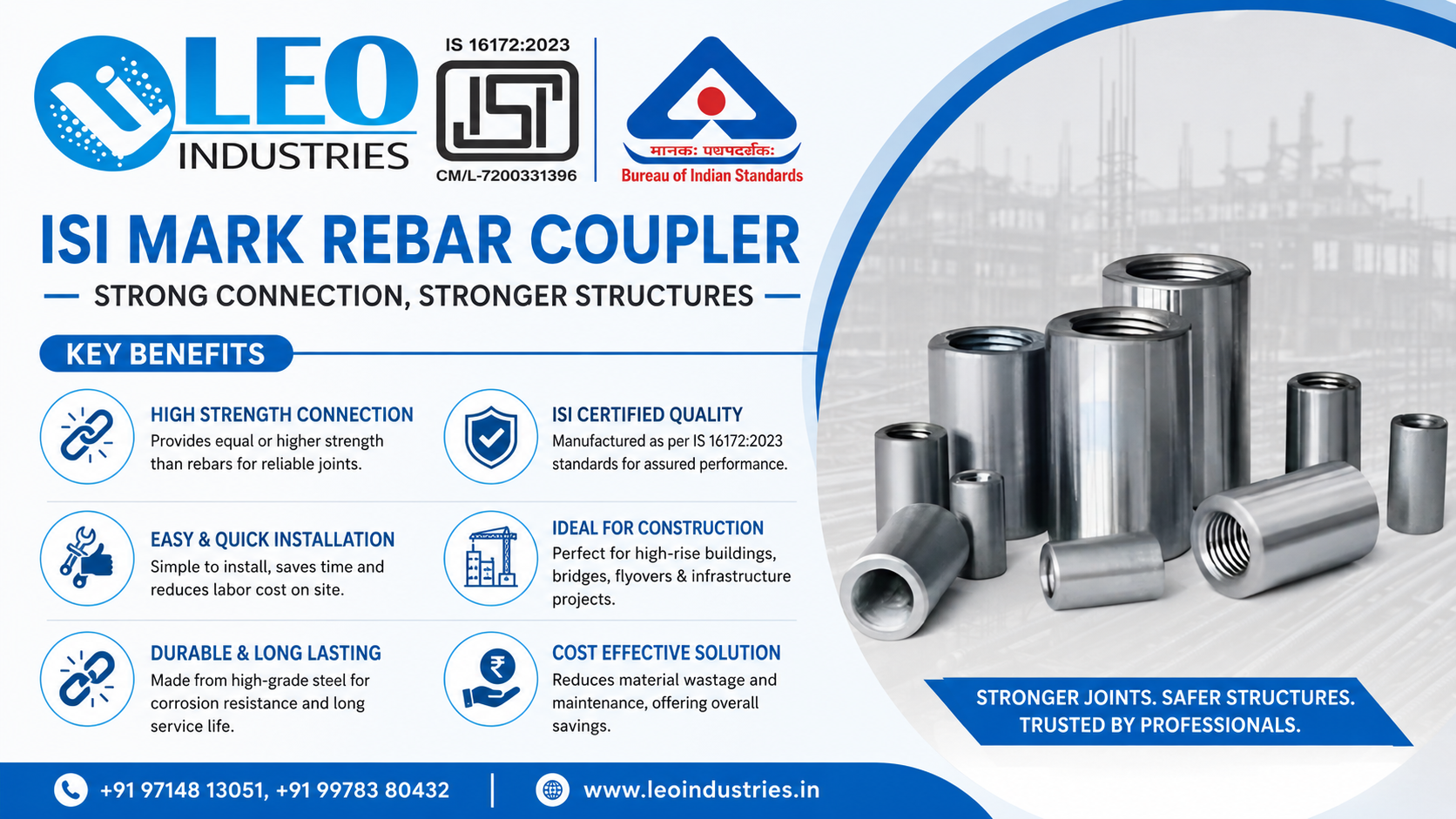
Modern mechanical rebar couplers offer a precise and efficient alternative to traditional methods. Their design focuses on creating a connection that is stronger than the parent bar, ensuring structural continuity.
- Full Strength Connection: Designed to exceed the yield strength of the rebar, ensuring the splice is not the weakest link.
- Threaded Design: Utilizes precision-machined threads (tapered or parallel) on both the rebar and the coupler for secure engagement.
- Material Compatibility: Manufactured from high-grade steels like SS316, SS304, or various mild steel grades to match rebar properties.
- Reduced Congestion: Significantly minimizes the amount of steel required at connection points compared to lapping, easing concrete pouring.
- Versatility: Available for a wide range of rebar diameters and types, including TMT bars and stainless steel rebars.
- Quick Installation: Engineered for efficient on-site assembly, reducing labor time and project schedules.
- Quality Control: Allows for visual inspection and torque wrench verification to confirm proper installation.
Industrial Applications and Use Cases
Reinforcement connection methods, particularly mechanical couplers, find extensive application across diverse construction sectors due to their reliability and efficiency.
- High-Rise Buildings: Connecting vertical reinforcement in columns and shear walls, reducing rebar congestion.
- Bridge Construction: Splicing long lengths of rebar in bridge decks, piers, and abutments for continuous load transfer.
- Infrastructure Projects: Used in metro rail projects, tunnels, and flyovers where structural integrity is paramount.
- Pre-Cast Concrete Elements: Joining pre-fabricated beams, columns, and wall panels on-site for faster assembly.
- Industrial Structures: Reinforcing heavy-duty foundations, machine bases, and large concrete slabs in factories.
- Seismic Zones: Providing robust, ductile connections that perform reliably under dynamic loading conditions.
- Repair and Retrofitting: Extending existing reinforcement or connecting new sections during structural upgrades.
How to Choose the Right Reinforcement Connection Method
Selecting the appropriate reinforcement connection method is a critical decision that impacts a project's structural integrity, cost, and timeline. Buyers should consider several factors beyond initial cost.
- Project Specifications: Verify the method aligns with design requirements, local building codes, and engineering standards.
- Rebar Type and Diameter: Ensure the connection system is compatible with the specific grade and size of reinforcement bars being used.
- Load Requirements: Assess whether the connection needs to achieve full tensile, compressive, or cyclic load capacity.
- Site Conditions: Consider space constraints, weather conditions, and available skilled labor for installation.
- Supplier Experience and Reputation: Choose a manufacturer with a proven track record in producing reliable connection systems.
- Certifications and Testing: Confirm the product meets relevant national and international quality standards and has undergone rigorous testing.
- Technical Support: Evaluate the supplier's ability to provide installation guidance, training, and after-sales service.
- Cost-Benefit Analysis: Compare the total cost, including material, labor, and potential time savings, against traditional methods.
Quality Standards and Compliance
Adherence to stringent quality standards and compliance is non-negotiable for reinforcement connection methods. These standards ensure that the connections perform as expected under design loads and environmental conditions. Buyers must verify that products meet relevant Indian Standards (IS) such as IS 16172:2014 for mechanical splices of bars, which specifies performance requirements for static and fatigue loading. International standards like ISO, ASTM, or BS may also be relevant for certain projects or export applications. A reputable supplier will provide documentation of material traceability, manufacturing process controls, and independent third-party testing results. Verifying these certifications before selection helps ensure the reliability and safety of the structural connections.
Why Company Experience and Capability Matters
The reliability of reinforcement connection methods depends significantly on the manufacturer's experience and technical capability. A company like Leo Industries, established in 2015, brings nearly a decade of focused expertise in manufacturing rebar couplers and related engineering products from its Ahmedabad facility. Their capability extends to working with a wide range of materials, including various stainless steel grades like SS316, SS304, and even SUPER DUPLEX, alongside mild steel grades such as EN8 and EN31. This material versatility ensures they can meet diverse project specifications.
Leo Industries' manufacturing process is supported by a comprehensive workshop equipped with CNC machines, lathes, milling machines, and specialized rebar forging, threading, and roll-thread machines. This in-house machinery allows for precise control over production and consistent product quality. While some specialized operations are outsourced to trusted, registered vendors, the core manufacturing and quality control remain under direct supervision. This integrated approach, combined with the guidance of experienced owners Mr. Mahesh Patel and Mr. Yagnesh Patel, ensures that each rebar coupler and connection component meets rigorous performance criteria, providing reliable solutions for complex construction demands.
Installation, Maintenance, and Care Tips
Proper installation is paramount for the effectiveness of any reinforcement connection method. Following manufacturer guidelines precisely ensures the connection achieves its designed strength.
- Surface Preparation: Ensure rebar ends are clean, free from rust, oil, or concrete residue before threading or coupling.
- Thread Quality: For threaded couplers, verify that the rebar threads are cut or rolled accurately and are free from damage.
- Torque Application: Use a calibrated torque wrench to tighten mechanical couplers to the manufacturer's specified torque value.
- Visual Inspection: After installation, visually inspect each connection for proper engagement and absence of gaps.
- Protection: Protect exposed rebar ends and couplers from environmental corrosion before concrete pouring, especially in aggressive environments.
- Storage: Store couplers and threading equipment in a dry, protected area to prevent damage or contamination.
- Equipment Calibration: Regularly calibrate threading machines and torque wrenches to maintain accuracy.
- Training: Ensure installation personnel are properly trained and certified in the specific connection system being used.
Frequently Asked Questions
The primary methods include lapping, welding, and mechanical splicing. Lapping involves overlapping two bars over a specified length, welding fuses bars together, and mechanical splicing uses a specialized coupler to join rebar ends, providing a continuous load path. Each method has distinct advantages and is chosen based on structural requirements and site conditions.
Mechanical rebar couplers offer several advantages over lapping, particularly in congested areas or for larger diameter bars. They reduce rebar congestion, which simplifies concrete pouring and improves structural performance. Couplers also minimize material waste, shorten installation times, and provide a full-strength connection that often exceeds the strength of the parent bar.
Yes, rebar couplers are designed to be compatible with various grades and diameters of TMT (Thermo-Mechanically Treated) bars. However, it is crucial to ensure that the specific coupler system chosen is certified for use with the particular TMT bar grade and size specified in the project design. Manufacturers provide detailed compatibility charts and technical specifications.
When properly installed according to manufacturer specifications and relevant building codes, a rebar coupler is designed to last the entire service life of the concrete structure itself. The connection is engineered to be stronger than the rebar it joins, ensuring its durability and performance for decades, provided it is protected within the concrete matrix.
In corrosive environments, such as coastal areas or industrial zones, it is important to select couplers made from corrosion-resistant materials like stainless steel or those with protective coatings. Proper concrete cover and quality concrete mix also play a vital role in protecting the rebar and couplers from environmental degradation, ensuring long-term structural integrity.
To ensure quality, verify that the supplier provides product certifications adhering to national or international standards like IS 16172. Request material test reports, independent third-party test certificates, and a clear quality assurance process. Visiting the manufacturing facility or reviewing their quality control procedures can also provide confidence in their products.
Conclusion
The selection and implementation of appropriate reinforcement connection methods are foundational to the safety and longevity of any construction project in Ahmedabad. From traditional lapping to advanced mechanical couplers, each technique offers specific benefits and considerations. Understanding the technical specifications, quality standards, and practical applications allows engineers and contractors to make informed decisions that optimize structural performance and project efficiency. Partnering with experienced manufacturers who demonstrate robust technical capability and a commitment to quality ensures that the chosen connection methods contribute effectively to the overall integrity of the built environment.
Get In Touch
Leo Industries