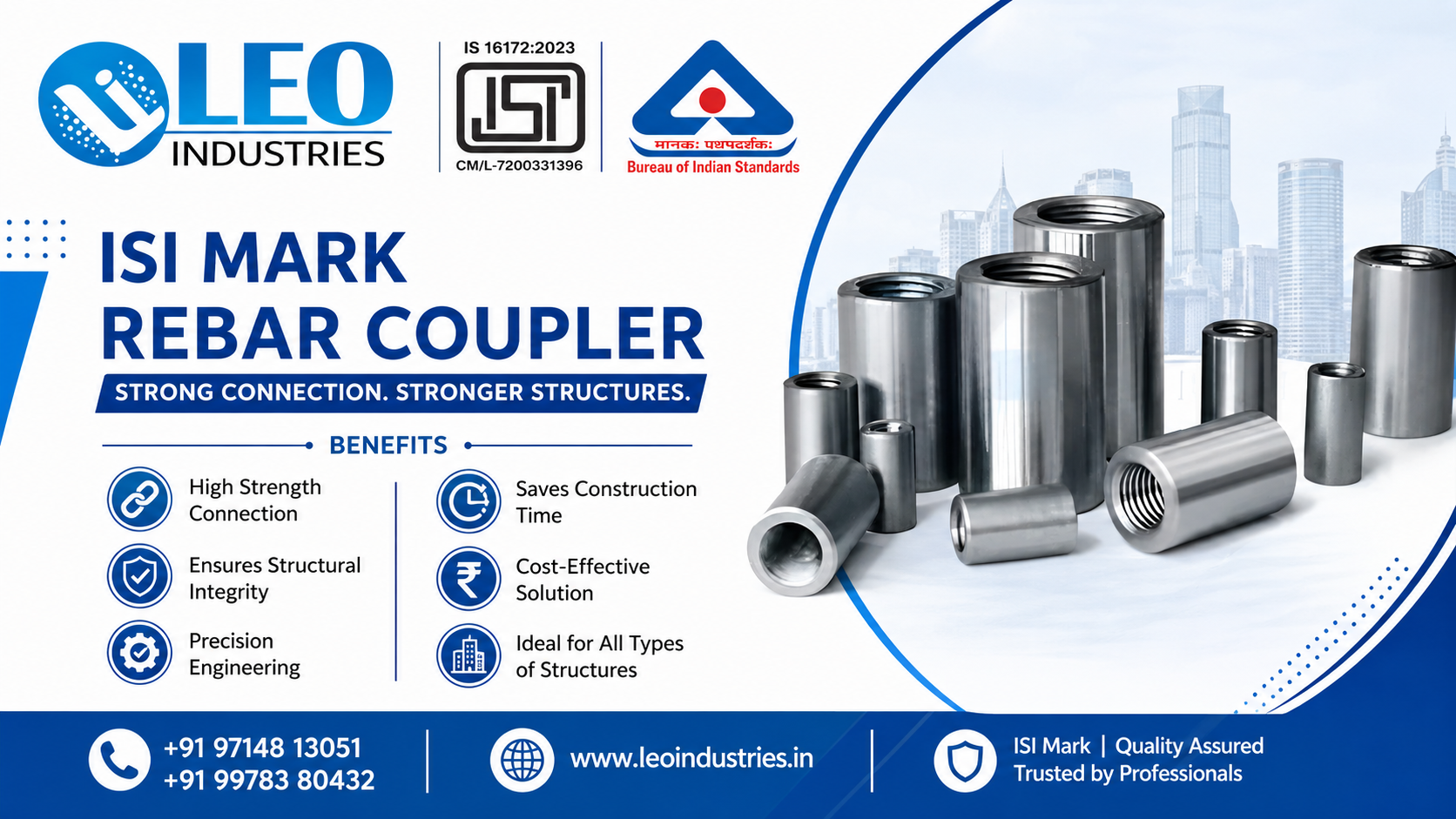
What Is Mechanical Splicing in Construction
Explore mechanical splicing in construction, its benefits, and applications for robust structures. Learn how rebar couplers enhance project integrity in Ahmedab
What Is Mechanical Splicing in Construction: An Ahmedabad Perspective
Modern construction demands robust and efficient methods for joining reinforcing steel bars. Traditional lapping techniques, while common, can sometimes lead to material waste and design complexities in high-stress areas. Mechanical splicing offers a precise and reliable alternative, ensuring continuity and strength in concrete structures. For projects across Ahmedabad and the wider Gujarat region, understanding this technique is crucial for optimizing structural integrity and project timelines.
WHY THIS MATTERS IN AHMEDABAD, GUJARAT
Ahmedabad, as a rapidly developing urban and industrial hub, sees continuous infrastructure growth, including high-rise buildings, bridges, and industrial complexes. Gujarat's broader development initiatives also require advanced construction practices that prioritize safety, speed, and material efficiency. Mechanical splicing provides a critical solution for these projects, reducing congestion in heavily reinforced sections and simplifying design for engineers and contractors. This method supports the demand for durable and resilient structures that can withstand local environmental conditions and operational loads.
WHAT IS MECHANICAL SPLICING IN CONSTRUCTION — OVERVIEW
Mechanical splicing involves connecting two reinforcing steel bars (rebars) end-to-end using a specialized mechanical device, typically a rebar coupler. Unlike traditional lapping, where bars overlap and transfer stress through concrete, mechanical splices create a direct, positive connection. This method ensures the tensile and compressive forces are transferred efficiently between the bars, maintaining the structural integrity of the concrete element. The process often involves threading or pressing the rebar ends into a coupler, forming a joint that is designed to be stronger than the rebar itself.
KEY FEATURES AND TECHNICAL SPECIFICATIONS
Achieves full tensile strength of the rebar, often exceeding the parent bar.
Reduces rebar congestion in heavily reinforced areas, simplifying concrete placement.
Allows for precise alignment of rebar, improving structural accuracy.
Minimizes material waste compared to extensive lapping methods.
Provides a consistent and verifiable connection, enhancing quality control.
Suitable for various rebar diameters and steel grades.
Designed for quick and efficient installation on-site.
INDUSTRIAL APPLICATIONS AND USE CASES
- High-Rise Buildings: Connecting vertical rebar in columns and shear walls, especially in seismic zones.
- Bridges and Flyovers: Ensuring continuity of reinforcement in long spans and critical load-bearing elements.
- Precast Concrete Elements: Facilitating connections between pre-manufactured concrete sections on-site.
- Industrial Structures: Reinforcing heavy-duty foundations, machine bases, and large concrete slabs.
- Power Plants and Dams: Providing robust connections in critical infrastructure requiring long-term durability.
- Metro and Railway Projects: Splicing rebar in tunnels, elevated tracks, and station foundations.
- Repair and Retrofitting: Extending existing rebar or connecting new sections to old structures.
HOW TO CHOOSE THE RIGHT MECHANICAL SPLICING SOLUTION
Selecting the appropriate mechanical splicing solution requires careful consideration of several project-specific factors. The choice impacts both structural performance and construction efficiency. Evaluating these aspects ensures the chosen system meets all engineering requirements and site conditions.
- Rebar Diameter and Grade Compatibility: Verify the coupler is designed for the specific rebar size and steel grade used in the project.
- Load Transfer Requirements: Confirm the coupler's ability to develop the full tensile and compressive strength of the rebar.
- Installation Method: Assess the ease and speed of installation, considering available tools and site labor skills.
- Certification and Standards: Ensure the splicing system complies with relevant national and international building codes (e.g., IS, ISO, ACI).
- Supplier Experience and Support: Choose a supplier with a proven track record in manufacturing and technical support for mechanical splicing products.
- Customization Needs: Determine if the supplier can provide couplers for specific design requirements, such as reducer couplers for different bar sizes.
- Environmental Conditions: Consider the site environment, such as exposure to corrosive elements, which might necessitate stainless steel couplers.
QUALITY STANDARDS AND COMPLIANCE
Adherence to stringent quality standards is paramount for mechanical splicing components. In India, relevant standards include various Indian Standards (IS) codes, such as IS 16172:2014 for mechanical splices of reinforcing bars. International standards like ISO 15835 and ACI 318 also provide guidelines for performance and testing. Buyers should always verify that the mechanical splicing system, particularly rebar couplers, has undergone rigorous testing and holds certifications from recognized bodies. This ensures the couplers meet specified strength, fatigue, and slip requirements, providing confidence in the structural integrity of the connection. A reputable supplier will readily provide documentation of their product's compliance and testing results.
WHY COMPANY EXPERIENCE AND CAPABILITY MATTERS
The reliability of mechanical splicing components directly impacts structural safety, making the manufacturer's experience and capability critical. Leo Industries, established in 2015 in Ahmedabad, Gujarat, has developed expertise in producing a range of rebar couplers, including TMT bar couplers, tapered thread rebar couplers, and stainless steel rebar couplers. Our manufacturing process utilizes advanced machinery like CNC, rebar forging, and rebar threading machines, ensuring precision and consistency. The team, guided by Mr. Mahesh Patel and Mr. Yagnesh Patel, focuses on quality control at every stage, from material sourcing (SS316, SS304, MS, EN8) to final product inspection. This comprehensive approach allows for the production of components that meet demanding project specifications and provides reliable after-sales support, crucial for complex construction projects.
INSTALLATION, MAINTENANCE AND CARE TIPS
Proper installation and care are essential for the long-term performance of mechanical splices.
Installation
Ensure rebar ends are cut square and free from burrs or deformations.
Clean threads thoroughly before assembly to prevent seizing.
Use appropriate torque wrenches or specialized tools for tightening threaded couplers to manufacturer specifications.
Verify full engagement of the rebar into the coupler body.
Protect exposed coupler threads from dirt, moisture, and damage prior to concrete pour.
Maintenance
Once encased in concrete, mechanical splices generally require no ongoing maintenance.
During storage on-site, keep couplers in their original packaging or protected from environmental exposure.
Inspect couplers for any damage before installation.
Care:
Handle couplers carefully to avoid dropping or deforming them.
Store in a dry, covered area away from direct sunlight and extreme temperatures.
- Follow manufacturer guidelines for specific coupler types and their handling.
FREQUENTLY ASKED QUESTIONS
Mechanical splicing offers several key advantages, including reduced rebar congestion, which simplifies concrete placement and improves structural performance. It also minimizes material waste, as less rebar is required compared to the extensive overlap in lapping. Furthermore, mechanical splices provide a more consistent and verifiable connection, ensuring greater structural integrity and often faster installation times on site.
A rebar coupler ensures strength by creating a direct, positive connection between two reinforcing bars. It is engineered to transfer the full tensile and compressive forces across the joint, often designed to be stronger than the rebar itself. This is achieved through precise threading, pressing, or grouting mechanisms that securely grip the rebar ends, maintaining the continuity of the reinforcement within the concrete structure.
Yes, many types of mechanical splices are specifically designed and tested for use in seismic applications. These couplers are engineered to withstand cyclic loading and maintain their integrity under dynamic forces, crucial for structures in earthquake-prone regions. It is essential to select couplers that are certified to meet relevant seismic design codes and performance requirements to ensure structural resilience.
Common types of rebar couplers include parallel threaded couplers, tapered thread couplers, and grouted sleeve couplers. Parallel threaded couplers involve threading the rebar ends and screwing them into a coupler sleeve. Tapered thread couplers use a conical thread for a strong, self-aligning connection. Grouted sleeve couplers involve inserting plain-ended rebars into a sleeve and injecting high-strength grout to create the bond.
Yes, mechanical splicing systems can accommodate different diameters of rebar, particularly with the use of reducer couplers. These specialized couplers are designed to connect two bars of varying diameters while maintaining the required load transfer capacity. This flexibility is valuable in construction projects where design changes or structural requirements necessitate transitions between different rebar sizes.
When specifying mechanical splices, key factors include the rebar diameter and grade, the required load transfer capacity (tensile and compressive), and compliance with local and international building codes. The installation method, site conditions, and the manufacturer's technical support and certifications are also crucial considerations. Selecting a system that aligns with project specifics ensures optimal performance and safety.
Conclusion
Mechanical splicing represents a significant advancement in concrete reinforcement technology, offering a reliable and efficient alternative to traditional rebar lapping. Its ability to provide full strength continuity, reduce congestion, and streamline construction processes makes it invaluable for modern infrastructure projects. For engineers and contractors in Ahmedabad and across Gujarat, understanding the various types of mechanical splices, their applications, and the importance of quality standards is essential. Partnering with an experienced manufacturer like Leo Industries, who can provide certified, precision-engineered rebar couplers and technical support, ensures that structural integrity and project success are consistently achieved.
Get In Touch
Leo Industries