Complete Guide to Reinforcement Connections
Expert guide to rebar couplers and reinforcement connections in Ahmedabad. Learn about types, applications, and quality standards from Leo Industries.
What is a Rebar Coupler? An Overview
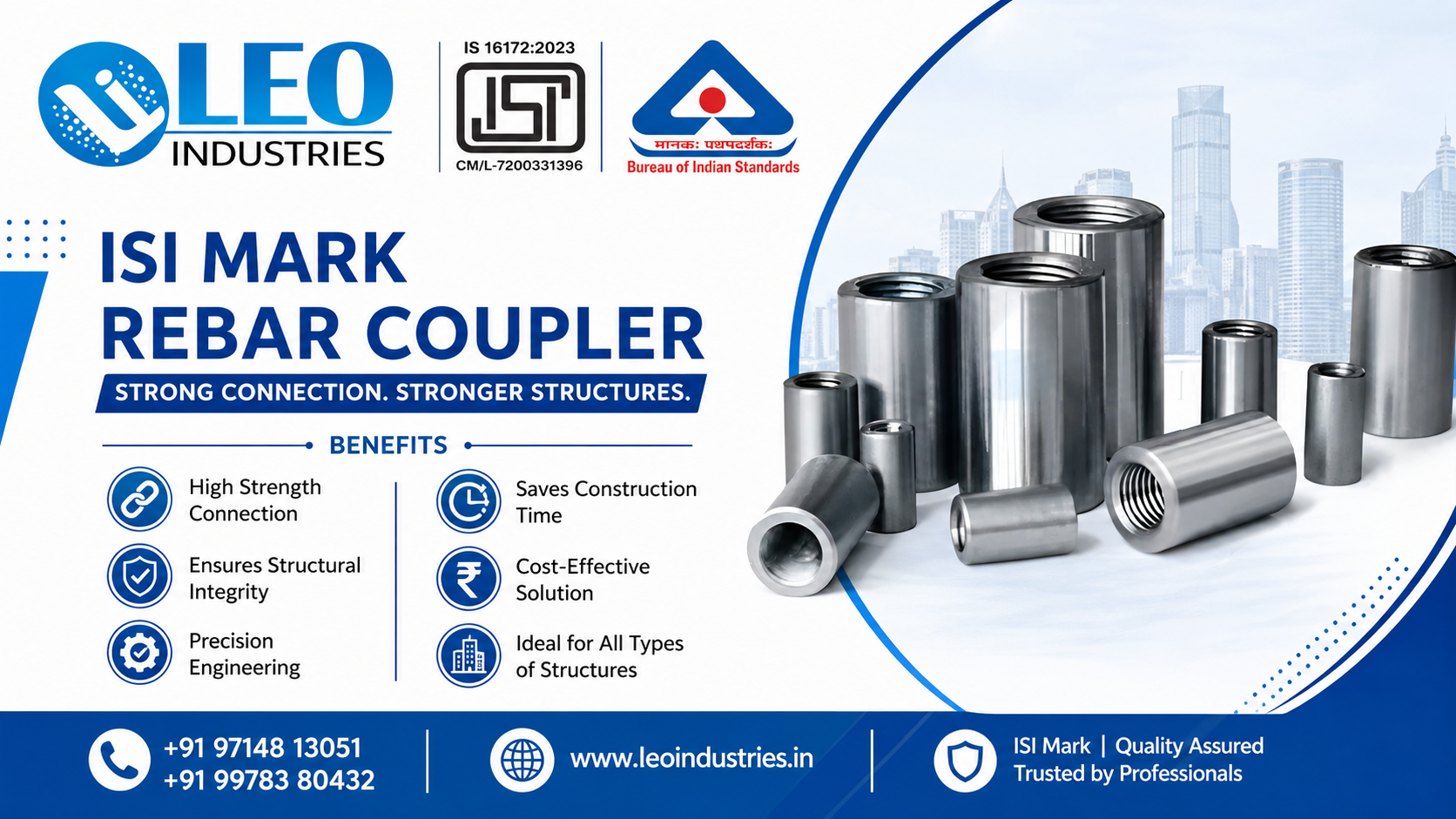
A rebar coupler, also known as a rebar splice or connector, is a mechanical device designed to join two reinforcing steel bars together. Unlike traditional lap splicing, which relies on overlapping bars and requires more steel, couplers create a direct, strong connection. They work by threading onto the ends of rebars, which are typically prepared with matching threads. When tightened, the coupler effectively bonds the two bars into a single, continuous unit. This method ensures a consistent and predictable load transfer, maintaining the structural integrity of the reinforced concrete element.
Key Features and Technical Specifications
Modern rebar couplers are engineered with precision to meet stringent construction demands. Key features and specifications to consider include:
- Material: Typically manufactured from high-grade steel (mild steel or stainless steel) to match the strength and corrosion resistance of the rebars being joined.
- Thread Type: Common types include parallel threads, tapered threads, and taper-parallel threads, each offering specific advantages in installation and load-bearing capacity.
- Tensile Strength: Designed to achieve at least 100% of the characteristic yield strength of the rebar, ensuring no reduction in the steel's capacity.
- Fatigue Resistance: Engineered to withstand repeated stress cycles, crucial for structures subjected to dynamic loads like bridges or high-rise buildings.
- Corrosion Resistance: Stainless steel variants offer enhanced protection against rust, ideal for harsh environments or structures with extended service life requirements.
- Ease of Installation: Many designs prioritize simple, fast installation with standard tools, reducing labor time and complexity on-site.
- Bar Diameter Compatibility: Couplers are available in a wide range of sizes to accommodate various rebar diameters, from small gauge bars to large structural bars.
Industrial Applications and Use Cases
The versatility and reliability of rebar couplers make them indispensable across a broad spectrum of construction projects:
- High-Rise Buildings: Essential for continuous reinforcement in tall structures, ensuring consistent load transfer from foundation to the top floors.
- Bridges and Flyovers: Critical for creating strong, continuous rebar splices in decks, piers, and abutments, enhancing structural longevity and safety.
- Industrial Plants: Used in heavy-duty concrete structures that require high tensile strength and resistance to vibration or stress.
- Precast Concrete Elements: Facilitates the efficient joining of precast sections, speeding up on-site assembly and improving quality control.
- Seismic Zones: Provides superior performance in earthquake-prone areas by ensuring a robust connection that can withstand significant seismic forces.
- Tunnel Linings: Used to create continuous reinforcement in concrete segments, contributing to the structural stability of underground structures.
- Infrastructure Projects: Applicable in dams, retaining walls, and other large-scale civil engineering works where reliable reinforcement is paramount.
How to Choose the Right Rebar Coupler
Selecting the appropriate rebar coupler is a critical decision that impacts project safety, efficiency, and cost. Consider these factors:
- Rebar Type and Grade: Ensure the coupler material and strength rating are compatible with the specific TMT bar grade (e.g., Fe 500, Fe 550) and type (mild steel, stainless steel) being used.
- Connection Type Required: Determine if a parallel, tapered, or other specialized thread type is best suited for the application and installation conditions.
- Load Requirements: Verify that the coupler's tensile and fatigue strength meet or exceed the design loads specified by structural engineers.
- Environmental Conditions: For corrosive environments, opt for stainless steel or specially coated couplers to prevent premature degradation.
- Installation Feasibility: Assess the ease of installation on-site, considering available tools, labor skills, and space constraints.
- Supplier Reputation and Certifications: Choose a reputable manufacturer with proven quality control and relevant product certifications.
- Project Specifications and Codes: Ensure the chosen coupler complies with local building codes and project-specific technical requirements.
Quality Standards and Compliance
Adherence to recognized quality standards is non-negotiable when selecting rebar couplers. Reputable manufacturers will ensure their products meet international and national benchmarks. In India, standards like IS 1608 (Mechanical Splices for Reinforcing Bars) and IS 1786 (High Strength Deformed Steel Bars for Concrete Reinforcement) are relevant. Couplers should ideally be tested and certified by accredited third-party laboratories or relevant authorities. Buyers should always verify that the supplier can provide documentation confirming compliance with these standards, including test reports for tensile strength, yield strength, and elongation. This due diligence ensures that the chosen couplers will perform reliably under load and contribute to the overall safety of the construction.
Why Leo Industries' Experience and Capability Matters
Established in Ahmedabad in 2015, Leo Industries brings a decade of focused experience in manufacturing high-quality rebar couplers and related components. Our expertise lies in understanding the precise engineering requirements for robust reinforcement connections in demanding construction environments. We operate a well-equipped manufacturing unit featuring advanced machinery, including CNC machines, rebar threading machines, and roll threading machines, allowing for precision in every component. Our team possesses deep knowledge of various steel grades, including stainless steel (SS316, SS316L, SS304) and mild steel (EN8, EN31), ensuring we can produce couplers tailored to specific project needs. We are committed to rigorous quality control at every stage, from material sourcing to final inspection, ensuring that each rebar coupler we deliver meets stringent performance criteria and contributes to the structural integrity of your projects in Ahmedabad and beyond.
Installation, Maintenance, and Care Tips
Proper installation is crucial for the performance of rebar couplers. Ensure that the ends of the rebars are clean, free from dirt or damage, and properly threaded. Use the correct torque wrench to tighten the coupler to the manufacturer's specifications, ensuring a secure connection without over-stressing the threads. For maintenance, while mechanical couplers are designed for durability, periodic visual inspection of critical structures can help identify any potential issues. In environments prone to corrosion, using stainless steel couplers or applying protective coatings to mild steel couplers can extend their service life. Always follow the manufacturer's specific installation guidelines to guarantee optimal performance and longevity.
Frequently Asked Questions
Rebar couplers offer a direct mechanical connection, eliminating the need for overlapping bars. This results in a stronger, more reliable splice that transfers tensile forces efficiently, reduces steel congestion in heavily reinforced areas, and can lead to faster construction times.
Yes, rebar couplers are designed to be compatible with various grades and types of TMT bars. It is essential to match the coupler's specifications, including material and thread type, to the specific rebar being used to ensure optimal performance.
Tapered thread couplers use a tapered thread design, which provides a self-locking action and can accommodate slight misalignments. Parallel thread couplers require precise alignment but offer a consistent thread engagement. The choice depends on the specific application and installation requirements.
Look for suppliers who can provide evidence of compliance with relevant Indian Standards (IS) such as IS 1608 for mechanical splices, and international standards like ISO. Third-party testing and certification reports are strong indicators of quality.
Stainless steel couplers are highly recommended for projects in corrosive environments, such as coastal areas, or where a very long service life is expected. For standard applications, high-quality carbon steel couplers are often sufficient and more cost-effective.
Rebar coupler installation is generally faster and requires less labor than lap splicing, especially for larger diameter bars. It involves threading the coupler onto the prepared rebar ends and tightening to torque specifications, which is often simpler than accurately positioning and tying overlapping bars.
Conclusion
In Ahmedabad's thriving construction sector, the choice of reinforcement connection method significantly impacts structural integrity, project timelines, and overall cost-effectiveness. Rebar couplers represent a modern, efficient, and reliable alternative to traditional lap splicing. By understanding the technical specifications, applications, and quality standards, developers and contractors can make informed decisions. Partnering with experienced manufacturers like Leo Industries, who prioritize quality, precision, and adherence to industry best practices, ensures that your construction projects benefit from the most robust and dependable reinforcement connections available.
Get In Touch
Leo Industries