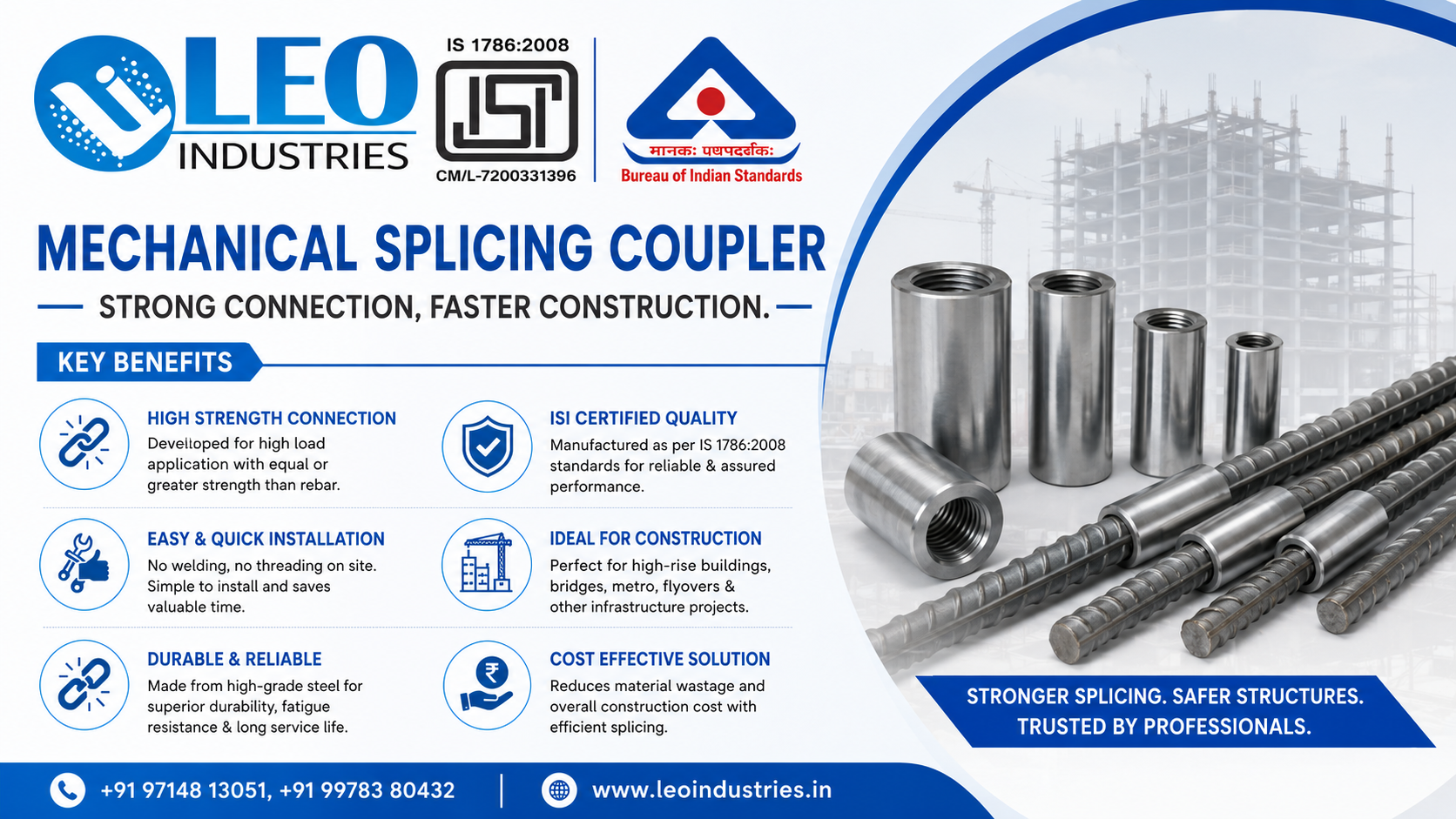
Mechanical Splicing Coupler Supplier
Expert mechanical splicing coupler supplier in Ahmedabad. Leo Industries offers high-quality rebar couplers for construction, ensuring strong and reliable conne
What is a Mechanical Splicing Coupler? — Overview
A mechanical splicing coupler is a device designed to connect two reinforcing steel bars (rebars) end-to-end, effectively creating a continuous length of rebar. Unlike traditional methods like lap splicing, which rely on overlapping bars and require more steel, mechanical couplers create a direct, high-strength connection. They work by threading onto the ends of rebars, which are typically prepared with matching threads, or by using a compression or swaging mechanism. This process ensures that the full tensile strength of the rebar is transferred across the splice, providing a robust and reliable joint.
Key Features and Technical Specifications
- High Tensile Strength Transfer: Designed to transmit the full characteristic strength of the rebar, often exceeding the strength of the rebar itself.
- Threaded Connection: Utilizes precisely machined threads for a secure and strong mechanical bond.
- Corrosion Resistance: Available in various materials, including stainless steel, to withstand corrosive environments.
- Versatile Sizing: Compatible with a wide range of rebar diameters, from smaller bars to larger structural sizes.
- Reduced Steel Consumption: Eliminates the need for lap lengths, saving on material costs and reducing congestion in concrete.
- Consistent Performance: Offers predictable and reliable performance, unaffected by environmental factors like moisture.
- Ease of Installation: Requires minimal specialized tools and training for quick and efficient on-site application.
Industrial Applications and Use Cases
- High-Rise Buildings: Essential for creating continuous rebar lengths in columns and beams, ensuring structural stability.
- Bridges and Flyovers: Provides critical connections for reinforcing bars in decks, piers, and abutments, where load-bearing capacity is paramount.
- Industrial Plants: Used in the construction of heavy-duty foundations, machinery bases, and structural elements in manufacturing facilities.
- Infrastructure Projects: Critical for tunnels, dams, and large-scale civil engineering works requiring robust rebar continuity.
- Precast Concrete Elements: Facilitates the joining of rebar in precast sections, allowing for easier transportation and assembly on-site.
- Retrofitting and Repair: Enables the extension of existing rebar in renovation or repair projects where lap splicing might be impractical.
How to Choose the Right Mechanical Splicing Coupler
Selecting the appropriate mechanical splicing coupler is crucial for the success of your construction project. Consider these factors:
- Rebar Diameter and Grade: Ensure the coupler is designed for the specific diameter and grade of rebar being used.
- Type of Splicing: Decide between parallel thread, tapered thread, or other mechanical joining methods based on application requirements.
- Material Compatibility: Choose materials (e.g., carbon steel, stainless steel) that suit the environmental conditions of the construction site.
- Load Requirements: Verify that the coupler meets or exceeds the design tensile and yield strength requirements for the application.
- Certifications and Standards: Look for couplers that comply with relevant national and international construction standards (e.g., IS, ISO, ASTM).
- Supplier Reputation and Support: Partner with a reputable supplier known for quality products and reliable technical assistance.
- Ease of Installation: Consider the complexity of installation and the availability of trained personnel or simple on-site procedures.
Quality Standards and Compliance
For any structural component, adherence to stringent quality standards is non-negotiable. Mechanical splicing couplers must meet specific performance criteria to ensure the safety and longevity of the structure. In India, compliance with Bureau of Indian Standards (BIS) specifications, such as IS 1608 for mechanical strength and IS 13920 for ductile detailing, is essential. Reputable manufacturers will also adhere to international standards like ISO for quality management and potentially ASTM standards for material properties and testing. Buyers should always verify that the couplers they procure are accompanied by test certificates and documentation confirming their compliance with applicable standards.
Why Leo Industries' Experience and Capability Matters in Ahmedabad
Established in 2015, Leo Industries has built a strong foundation as a reliable manufacturer and supplier of rebar couplers in Ahmedabad. Our journey began with a clear vision to provide high-quality, dependable splicing solutions to the construction industry. We understand the unique demands of projects in Gujarat, and our manufacturing processes are honed to meet these specific needs. Our facility in Ahmedabad is equipped with advanced machinery, including CNC machines, rebar threading machines, and roll threading machines, enabling us to produce a diverse range of couplers with precision.
Our team comprises experienced engineers and technicians who are dedicated to maintaining rigorous quality control at every stage, from material selection to final product inspection. We pride ourselves on our ability to manufacture components from various steel grades and other materials, ensuring we can cater to a wide spectrum of project requirements. This in-house capability, combined with our commitment to timely delivery and responsive customer support, makes Leo Industries a trusted partner for mechanical splicing coupler needs in Ahmedabad and beyond.
Installation, Maintenance, and Care Tips
Proper installation is paramount to achieving the full strength and reliability of mechanical splicing couplers. Ensure that rebar ends are clean, free from rust or debris, and accurately threaded or prepared according to the coupler manufacturer's specifications. For threaded couplers, apply a suitable thread lubricant if recommended and tighten them to the specified torque. Avoid over-tightening, which can damage the threads.
During installation, protect couplers from excessive dirt, concrete splatter, and damage. Regular site inspections should include checking the integrity of the splices. While mechanical couplers are designed for durability, proper handling and protection during the construction phase will ensure their optimal performance throughout the structure's lifespan. For any maintenance queries or specific installation guidance, consulting with Leo Industries' technical support team is always recommended.
Frequently Asked Questions
Mechanical couplers offer superior strength, reduce rebar congestion, save on steel material, and are generally faster to install, leading to quicker project completion times compared to traditional lap splicing methods.
Yes, mechanical couplers are designed to be compatible with various rebar diameters and grades, including standard mild steel and high-strength deformed bars commonly used in construction.
Many types of mechanical couplers are specifically designed and tested to meet stringent seismic performance requirements, providing reliable connections in earthquake-prone regions.
Rebar ends typically need to be clean and free of rust, dirt, or damage. For threaded couplers, the ends must be accurately threaded to match the coupler's internal threads.
Always source couplers from reputable manufacturers like Leo Industries, who can provide test certificates, material traceability, and proof of compliance with relevant Indian and international standards.
When installed correctly and made from appropriate materials, mechanical couplers are designed to last for the entire service life of the structure, providing a permanent and reliable connection.
Conclusion
In the demanding construction environment of Ahmedabad, opting for advanced solutions like mechanical splicing couplers is a strategic decision. They offer a robust, efficient, and reliable method for joining reinforcing bars, directly contributing to the structural integrity and timely completion of projects. By understanding the technical specifications, applications, and selection criteria, builders can leverage these couplers to their full potential. Partnering with an experienced and quality-focused supplier like Leo Industries ensures access to dependable products and expert support, making them an invaluable asset for any construction endeavor in the region.
---
Get In Touch
Leo Industries