Mechanical Splicing vs Traditional Methods
Understand the differences between mechanical splicing and traditional rebar connection methods for construction projects in Ahmedabad, Gujarat. Learn about eff
What is Mechanical Splicing — An Overview
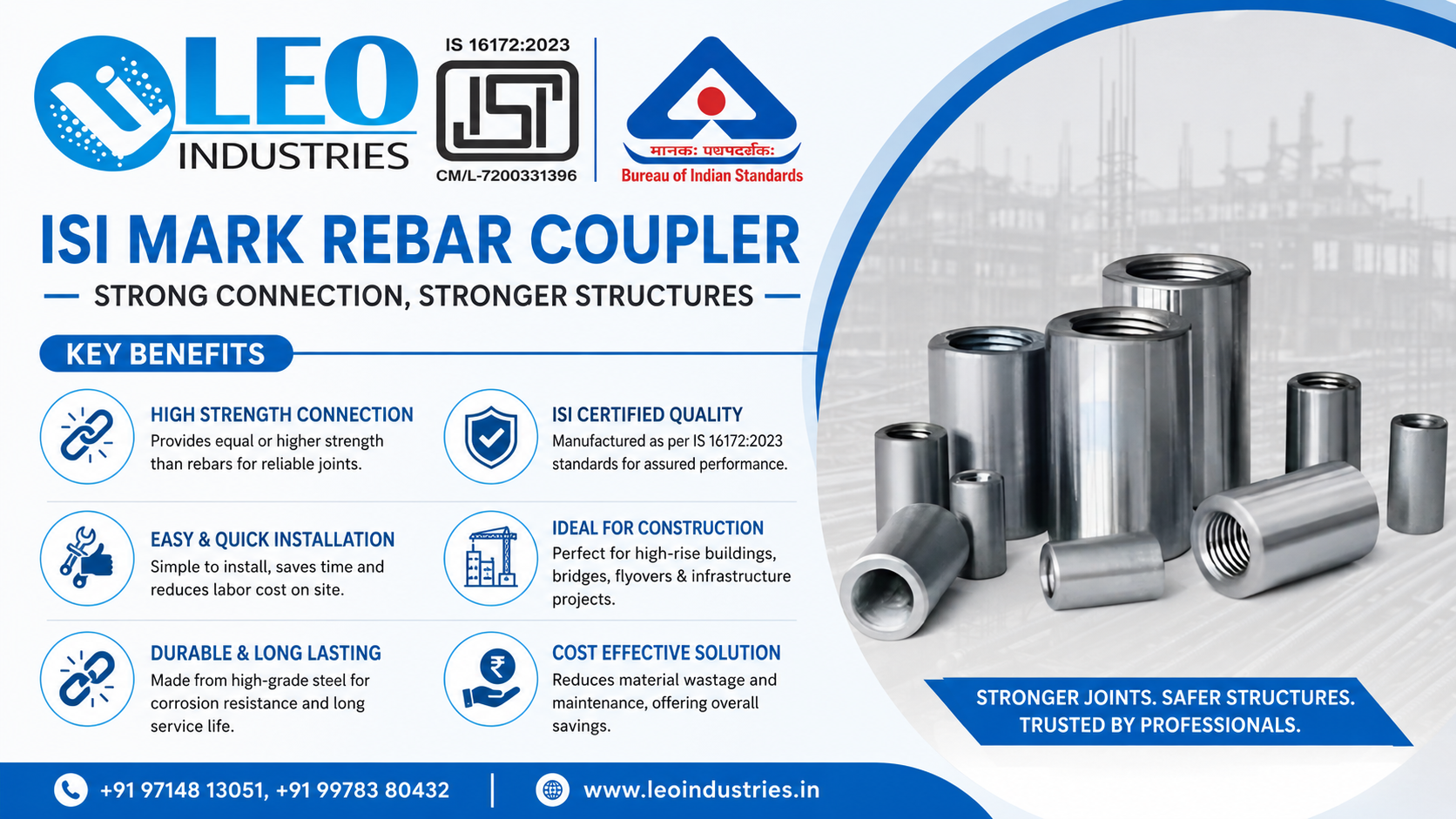
Mechanical splicing involves connecting two reinforcing bars using an engineered device known as a rebar coupler. Unlike traditional methods that rely on overlapping bars or welding, mechanical splices create a full-strength connection that often exceeds the strength of the rebar itself. These couplers are typically threaded onto the rebar ends, pressed onto them, or filled with a specialized grout, forming a continuous load path. This method is widely adopted in situations where structural continuity, reduced congestion, and accelerated construction schedules are paramount.
Key Features and Technical Specifications of Mechanical Splicing Systems
Mechanical splicing systems offer distinct advantages through their design and performance characteristics. These engineered connections are designed to meet rigorous structural demands.
- Full Strength Connection: Often develops a tensile strength greater than or equal to the parent rebar, ensuring structural continuity.
- Reduced Rebar Congestion: Eliminates the need for long lap lengths, creating more space for concrete flow and reducing rebar density.
- Consistent Performance: Manufactured under controlled conditions, ensuring predictable and reliable connection quality.
- Faster Installation: Can significantly reduce installation time compared to traditional lap splicing, especially for larger diameter bars.
- Material Versatility: Compatible with various rebar grades and diameters, including TMT bars and stainless steel rebars.
- Fatigue Resistance: Engineered to withstand cyclic loading, making them suitable for structures subject to dynamic forces.
- Simplified Design: Allows for more straightforward structural detailing by eliminating complex lap calculations.
Industrial Applications and Use Cases for Mechanical Splicing
The versatility and performance of mechanical splicing make it suitable for a wide range of demanding construction applications across various industries.
- High-Rise Buildings: Essential for connecting vertical rebars in columns and shear walls, reducing congestion and accelerating floor cycles.
- Bridges and Flyovers: Provides robust connections for critical structural elements, enhancing durability and load-bearing capacity.
- Metro and Railway Projects: Used in tunnels, elevated structures, and station foundations where continuity and seismic resistance are crucial.
- Precast Concrete Elements: Facilitates efficient and strong connections between precast beams, columns, and wall panels.
- Seismic Zones: Offers superior performance under cyclic loading, crucial for structures in earthquake-prone regions.
- Industrial Foundations: Ensures strong, reliable connections for heavy machinery foundations and large industrial structures.
- Repair and Retrofitting: Ideal for extending existing structures or repairing damaged sections of rebar without extensive demolition.
How to Choose the Right Rebar Splicing Method for Your Project
Selecting the appropriate rebar splicing method requires careful consideration of several project-specific factors. An informed decision ensures both structural integrity and project efficiency.
- Project Scale and Type: Evaluate whether it's a high-rise, bridge, or a smaller residential structure, as each has different demands on connection strength and speed.
- Rebar Diameter and Grade: Different methods are more suitable for specific rebar sizes and material properties. Mechanical couplers are particularly advantageous for larger diameters.
- Load Requirements and Structural Design: Assess the anticipated stresses and design specifications. Mechanical splices often provide full-strength connections required for critical load paths.
- Site Conditions and Space Constraints: Consider the available working space, weather conditions, and access for equipment. Mechanical splicing can be beneficial in congested areas.
- Labor Availability and Skill Set: Evaluate the expertise of the available workforce. While lap splicing is common, mechanical splicing requires specific training for installation.
- Construction Schedule and Budget: Compare the time savings and material costs associated with each method. Mechanical splicing can reduce overall project duration.
- Regulatory Compliance: Ensure the chosen method adheres to local building codes, national standards, and project specifications for safety and performance.
Quality Standards and Compliance for Rebar Splicing in India
Adherence to established quality standards is non-negotiable for rebar splicing in any construction project, particularly in India. For mechanical splices, compliance with IS 16172:2014 (Indian Standard for Mechanical Splices of Reinforcing Bars) is crucial. This standard specifies requirements for the performance and testing of mechanical couplers, ensuring they meet the necessary tensile strength and fatigue resistance. Additionally, projects often refer to IS 456:2000 (Plain and Reinforced Concrete – Code of Practice) for general concrete design principles. Buyers should always verify that the chosen splicing system and its supplier hold relevant certifications, such as ISO 9001, and provide comprehensive test reports from accredited laboratories to confirm product performance and reliability.
Why Leo Industries' Experience and Capability Matters for Rebar Splicing Solutions
The effectiveness of mechanical splicing hinges on the quality of the couplers and the expertise of the manufacturer. Leo Industries, established in Ahmedabad, Gujarat, since 2015, brings a depth of experience in manufacturing precision engineering products, including a wide range of rebar couplers. Our founders, Mr. Mahesh Patel and Mr. Yagnesh Patel, guide a team with extensive knowledge in this specialized field. We utilize advanced machinery, including CNC machines, rebar forging machines, and rebar threading machines, to produce couplers from various stainless steel grades like SS316 and SS304, as well as mild steel grades. This in-house capability ensures strict quality control from raw material to finished product, allowing us to offer reliable, high-performance rebar connection solutions tailored to specific project requirements. Our focus on precision manufacturing and material expertise provides engineers and contractors with trustworthy components for critical structural applications.
Installation, Maintenance and Care Tips
Proper installation and handling are crucial for the long-term performance of any rebar splicing system. For mechanical couplers, ensure that rebar ends are cut squarely and free from burrs or deformations before threading or pressing. Follow the manufacturer's specific instructions meticulously regarding thread engagement, torque values, or crimping force. During storage, protect couplers from moisture, dirt, and damage to maintain their integrity. Regular inspection of installed splices is advisable to confirm proper engagement and detect any signs of loosening or corrosion, especially in aggressive environments. Training for installation teams is vital to ensure consistent application of the chosen splicing method.
FREQUENTLY ASKED QUESTIONS
Mechanical splicing connects rebars end-to-end using engineered couplers, creating a continuous load path with minimal material overlap. Lap splicing, a traditional method, involves overlapping two rebars over a specified length, relying on bond strength with the surrounding concrete. Mechanical splicing generally offers a stronger, more predictable connection, reduces rebar congestion, and can be more efficient for larger diameter bars.
Yes, mechanical splices are highly suitable for seismic zones. Many mechanical coupler systems are designed and tested to meet stringent seismic performance requirements, providing ductile connections that can withstand the cyclic loading and deformations expected during an earthquake. Their ability to achieve full rebar strength and maintain continuity is a significant advantage in such critical applications.
Mechanical couplers are available for a wide range of rebar diameters, typically from 10mm to 40mm or even larger, depending on the specific coupler system and manufacturer. This versatility makes them adaptable for various structural elements, from columns and beams to heavy foundations. It is important to select couplers that are specifically designed and certified for the rebar size and grade being used in the project.
Mechanical splicing can significantly accelerate construction timelines, particularly in projects with high rebar density or repetitive connections. By eliminating the need for extensive lap lengths and associated tying, installation becomes faster and less labor-intensive. This efficiency can lead to quicker floor cycles in high-rise construction and overall project completion ahead of schedule.
Common types of mechanical rebar couplers include parallel threaded couplers, tapered threaded couplers, grout-filled couplers, and swaged (pressed) couplers. Each type has specific applications and installation methods. Parallel threaded couplers are widely used, while tapered threads offer easier alignment. Grout-filled and swaged couplers are often employed where threading on-site is challenging.
To ensure quality, specify couplers that comply with relevant Indian Standards like IS 16172. Verify that the supplier provides test certificates from accredited laboratories demonstrating the couplers' performance. Implement a robust quality control plan on-site, including proper training for installers, regular visual inspections of installed splices, and occasional pull-out tests as specified by the project consultant.
Conclusion
The choice between mechanical splicing and traditional rebar connection methods holds significant implications for any construction project in Ahmedabad. While traditional lap splicing remains viable for certain applications, mechanical splicing offers compelling advantages in terms of structural integrity, construction efficiency, and reduced rebar congestion, especially for complex or high-stress structures. Understanding the technical merits and practical considerations of each method allows engineers and contractors to make informed decisions that contribute to safer, more durable, and more cost-effective construction outcomes. Prioritizing quality, compliance, and the experience of your supplier ensures the long-term performance of your rebar connections.
Get In Touch
Leo Industries